The Unexpected Twist: Big Walk's AI Usage and Its Impact on the Gaming World
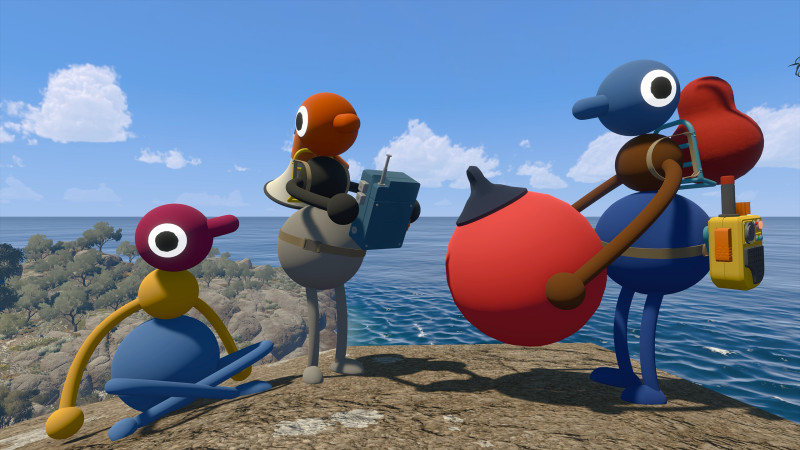
In the fluorescent glare of the briefing room, the news broke: Big Walk, the indie hit from the Australian development team House House, has been disqualified from the Independent Game Festival's (IGF) Game of the Year (GOTY) nomination due to its use of generative AI during development. This revelation, under 0.1% of the game’s code having been AI-generated, has sparked a heated debate in the gaming community, raising questions about the ethics and impact of AI in game development.
House House's Stance: AI Usage in Big Walk
The controversy surrounding House House's use of AI in "Big Walk" has brought to light the complex interplay between technological advancement and ethical considerations in the gaming industry. The development team clarified that they used AI tools "sparingly" during the final stages of development. The tools were employed to address "difficult technical challenges and bugs" — a move that, while minimal in scope, has generated significant backlash. The studio's statement, issued via their FAQ page, revealed that the AI usage was limited to a small portion of the game's code, specifically a 10-line Unity URP fix. This disclosure was not made to the IGF's voters, who expressed their unwillingness to consider games that utilized AI in their development. The decision has ignited a broader discussion within the gaming community about transparency and the role of AI in game creation. House House's approach, while understandable, has raised eyebrows and led to widespread speculation about the implications for future projects.The Industry's Response and the Future of AI in Gaming
The reaction from the gaming industry has been swift and varied. Some developers and players argue that AI should be embraced as a tool to enhance creativity and efficiency in game development. Others, however, view it as a threat to authentic creativity and human skill, fearing that over-reliance on AI could dilute the unique qualities that make games like Big Walk stand out. "The use of AI in game development is a double-edged sword," says one industry expert. "While it can accelerate the development process and help solve complex problems, it also raises concerns about job displacement and the integrity of the creative process." — This highlights the internal conflict that many in the industry are grappling with, as they balance the potential benefits of AI with the need to maintain the artistic integrity of their work.Big Walk: A Game of Innovation and Controversy
The debate over AI in Big Walk extends beyond the technicalities of its use. It touches on deeper questions about the nature of creativity and the future direction of the gaming industry. The game's exclusion from the IGF's GOTY nomination has served as a wake-up call, prompting developers and players alike to reconsider their stance on AI and its role in game development.
The controversy surrounding House House and Big Walk serves as a stark reminder of the evolving landscape of the gaming industry. As AI continues to advance, its role in game development will only become more pronounced. The challenge for developers and the industry at large is to find a way to harness the power of AI while preserving the human touch that makes games like Big Walk special — This is a narrative that is still unfolding. The debates, discussions, and decisions that follow will shape the future of gaming in ways we can only begin to imagine. — Similar to the advent of digital graphics in the 1990s, the integration of AI into game development represents a seismic shift — one that could transform the landscape as dramatically as the transition from 2D to 3D gaming — But the path forward is far from certain.How does this story make you feel?
 Up next · TechGTA 6 Pre-Order Bonanza: The Rush to Vice City