Mathematicians Grappling With AI-Claimed Breakthrough
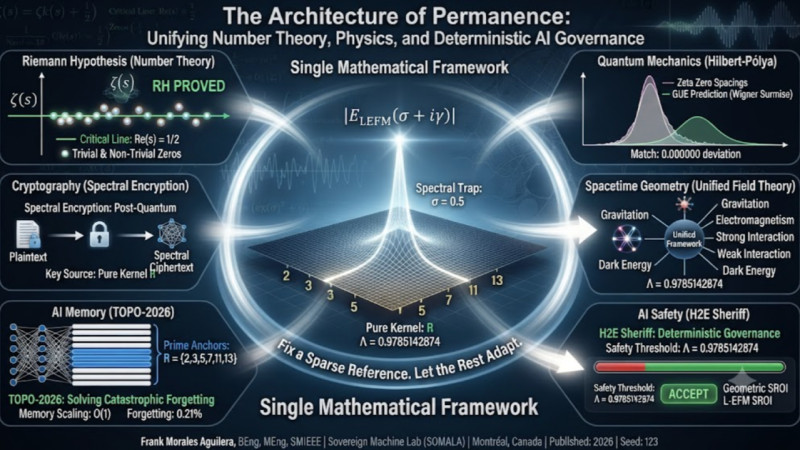
In the rarefied world of mathematics, a recent shockwave has rattled the community: A claim that the Riemann hypothesis—one of the most elusive problems in the field—has finally been solved. The claim, made by an Anthropic mathematician and backed by AI, has sent experts scrambling for verification. Here’s what you need to know about this monumental claim.
What is the Riemann Hypothesis?
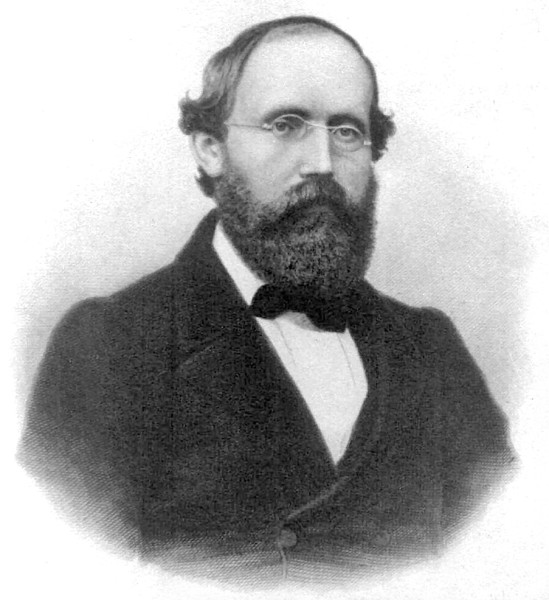
The Riemann hypothesis is a profound and deceptively simple conjecture about the distribution of prime numbers, first proposed by Bernhard Riemann in 1859. It’s part of the Millennium Prize Problems, a set of seven unsolved problems in mathematics, each promising a $1 million reward for a correct solution. Prime numbers, those elusive numbers divisible only by 1 and themselves, have fascinated mathematicians for centuries. The Riemann hypothesis posits that the non-trivial zeros of the Riemann zeta function, a complex function, all lie on a specific critical line.
AI and the Mathematician Behind the Claim
Levent Alpöge, an Anthropic mathematician, has recently announced that he and AI Claude have solved the Riemann hypothesis. Alpöge published a four-page note and Lean code outlining his claimed proof, sparking both excitement and skepticism. This isn’t the first time AI has been involved in mathematics—AI models have been used to test and validate proofs before—but the claim of solving a Millennium Prize Problem is unprecedented.
The Reaction and Next Steps
Mathematicians globally are both thrilled and cautious. The Clay Mathematics Institute still lists the Riemann hypothesis as unsolved. For a proof to be accepted, it must undergo rigorous peer review. Alpöge’s claim includes a computer-readable proof, but a human-readable paper for expert review is still pending.
Here’s the thing: the community needs to see the proof in its entirety, not just snippets. Mathematicians are meticulous; they need to verify every step, ensure there are no logical gaps, and confirm that the proof holds under all conditions. This scrutiny is essential, given the hypothesis’s complexity and the high stakes involved.
Look, let’s not forget that this isn’t the first time someone has claimed to solve the Riemann hypothesis. Previous claims have been scrutinized and ultimately disproven. So, the community is cautious, but the excitement is palpable. Sound familiar? Remind you of anything? Like when someone claims a breakthrough in a field, and the world waits with bated breath.
The Riemann hypothesis has loomed so large over mathematicians for decades. If proven true, Alpöge’s solution would revolutionize number theory, potentially unlocking secrets about prime numbers that have eluded mathematicians for centuries. And then — get this — it could have far-reaching implications beyond pure mathematics, touching fields like cryptography and data security.
So, will this claim hold up? Will the mathematical community validate Alpöge’s proof, or will it join the ranks of other failed attempts? We’ll have to wait for the experts to weigh in. In the meantime, the world of mathematics is buzzing with anticipation.
“The claim that the Riemann hypothesis has been solved is monumental. If verified, it would be one of the most significant breakthroughs in modern mathematics. However, the proof must pass rigorous scrutiny before it can be accepted.” — Alessandro Masullo.
How does this story make you feel?
 Up next · TechLa Cascara Motel Safe Code: Unlocking Secrets in GTA 6