Riemann Hypothesis Shaken: New AI-Driven Proof Claims
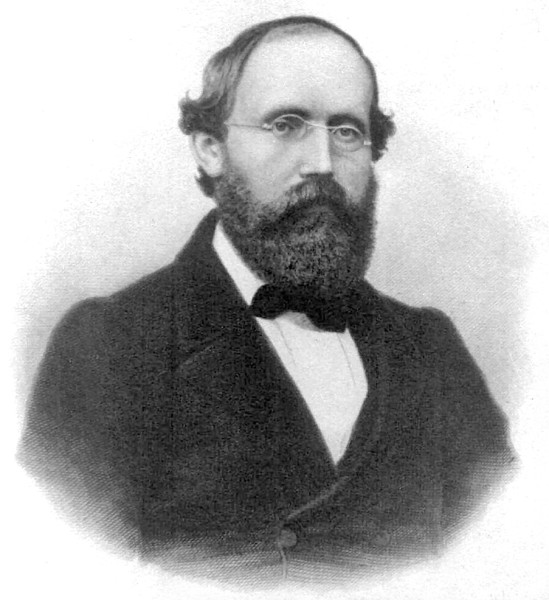
The mathematical world has been rocked by yet another bold claim in the realm of the Riemann hypothesis. This time, an anthropic mathematician has stepped forward with a stunning assertion: the Riemann hypothesis has been solved. Yet, the proof hinges on the power of artificial intelligence, sparking controversy, intrigue, and a whirlwind of debate among mathematicians and AI experts alike.
The Riemann Hypothesis Unveiled
The Riemann hypothesis is a cornerstone of pure mathematics, positing that the non-trivial zeros of the Riemann zeta function lie on a critical line. The conjecture has captivated mathematicians for over a century, with many considering it the most crucial unsolved problem in the field. The hypothesis asserts that the Riemann zeta function's zeros are only at negative even integers and complex numbers with a real part of 1/2.
Despite numerous attempts, the Riemann hypothesis has remained tantalizingly elusive. For over a century, mathematicians have grappled with its complexity, and it was even included in David Hilbert's list of 23 unsolved problems in 1900, serving as a blueprint for 20th-century mathematics. The hypothesis's significance is so profound that the Clay Mathematics Institute offers a $1 million prize for its resolution.
Levent Alpöge: The Man Behind the AI-Assisted Proof
Enter Levent Alpöge, a mathematician at the AI company Anthropic. Alpöge claims to have discovered and verified, with the help of formalization, a proof for the Riemann hypothesis using AI. The announcement sent shockwaves through the mathematical community, as the Riemann hypothesis has long been considered one of the most difficult and unsolved problems in the field.
Alpöge's assertion is not the first to challenge the Riemann hypothesis. A paper published in the IOSR Journal claimed that the hypothesis is incorrect and that the values of zeros and infinity are not possible in the zeta function series. However, Alpöge's approach is unique in its use of AI, which has been a game-changer in various scientific disciplines.
AI vs. Human Intelligence: The New Frontier in Mathematics
AI's role in solving complex mathematical problems has been increasingly prominent. Recently, AI proved the quasi-Riemann hypothesis, a weaker version of the Riemann hypothesis. This AI-driven advance has raised questions about the future of mathematical proof and the potential for AI to surpass human capabilities in solving intricate problems.
Alpöge's claim has sparked a flurry of activity among experts who are now scrutinizing his proof. The use of AI in this context has both excited and alarmed the mathematical community. While some see it as a groundbreaking approach, others are skeptical, questioning the reliability and validity of AI-generated proofs.
According to available reports, Alpöge’s purports to have solved the Riemann hypothesis with the assistance of Claude, potentially resolving one of mathematics' most difficult unsolved problems after 167 years. However, Alpöge announced the result, publishing a statement and a computer-generated proof.
“The proof of the Riemann hypothesis is a monumental achievement in mathematics. If verified, it will not only solve one of the most elusive problems in the field but also open new avenues for research and exploration. The use of AI in this context is a testament to the power of technology in pushing the boundaries of human knowledge”.
But proof is in the pudding, as they say. And for something as monumental as the Riemann hypothesis, no one's certain yet. Gone. Are we ready to trust an AI to rewrite the mathematical rulebook?
What does this mean for the future of mathematics? Do we trust the AI-powered proofs that could potentially reshape the foundations of our understanding? How far can AI take us in solving the unsolvable? And who is Claude, really? The mystery unfolds, and the mathematical world watches with bated breath. Think again.
If AI can solve the Riemann hypothesis, what can't it do?How does this story make you feel?
 Up next · ScienceCalifornia Earthquake: Monterey County Shaken by Recent Seismic Activity