Delta's Thanksgiving Nightmare: A Modern-Day Grounding of Travelers
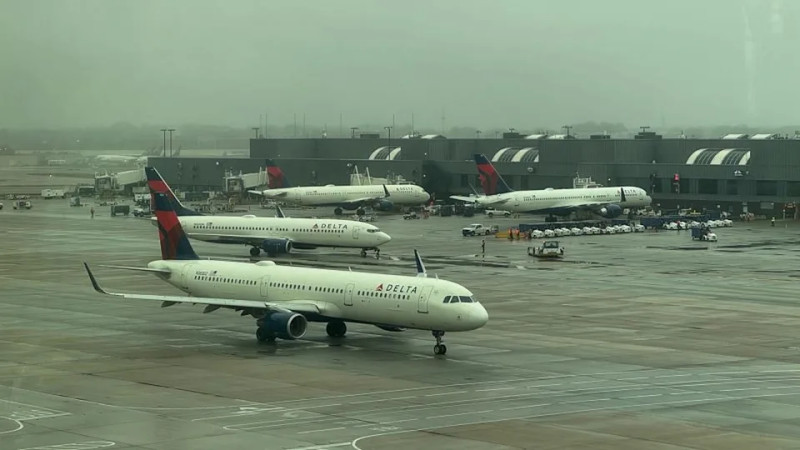
Imagine the Eiffel Tower folding in half, a metaphorically stunning collapse that might leave you wondering what a modern-day traveler is doing in a world where such structural integrity is a given. "It's not just the Eiffel Tower," you might think, "it’s the whole of Paris that's crumbling." Now, replace Paris with Atlanta, and the Eiffel Tower with Delta Air Lines, as the airline's recent technical failures sent ripples of chaos through the travel landscape, leaving passengers stranded and schedules in disarray.
The Technical Meltdown: Delta's Weight and Balance System
The outage, which began recently, knocked out Delta's automated system responsible for calculating aircraft weight and balance. This critical calculation ensures that planes are loaded correctly, balancing safety and efficiency. When the system went down, crews were forced to revert to manual calculations, a process that is both time-consuming and labor-intensive. As a result, over 1,500 flights were delayed, and more than 3,500 flights were impacted at Delta's hubs.
The Ripple Effects: Disrupted Plans and Angry Travelers
As the Thanksgiving holiday travel season kicked off, Delta's technical issues added to the chaos. Travelers, already expecting the usual holiday travel hurdles, were met with an unexpected digital roadblock. The outage highlighted the airline's reliance on automated systems, a reliance that came with a hefty price in terms of passenger frustration and logistical complexity.
The outage affected flights across the United States, with some reports indicating that over 1,600 flights were delayed due to the technical issue. The ripple effects were felt by travelers who had planned meticulously, only to find their carefully laid itineraries in tatters. Families eagerly anticipating Thanksgiving reunions were forced to wait, and business travelers missed meetings, all because Delta’s digital backbone faltered.
The Road to Recovery: Delta's Response
Delta Air Lines responded to the outage by implementing manual workarounds, a temporary solution that allowed the airline to continue operating, albeit at a reduced capacity. The airline's statement indicated that the issue had been resolved, and operations were gradually returning to normal. However, the incident raised questions about the airline's preparedness for such technical failures and the resilience of its systems.
Delta's prompt response to the crisis was a silver lining in an otherwise tumultuous period, but it also underscored the critical need for robust backup systems and contingency plans. The airline’s ability to recover from the outage will likely influence public perception and trust in the near future, as travelers assess their options for the upcoming holiday seasons.
It remains to be seen how Delta will address these technical vulnerabilities, but one thing is clear: the modern traveler expects smooth sailing, and any hiccup can leave them feeling as disoriented as a sailor lost at sea.
"This outage is a stark reminder that even the most advanced systems can fail, and it's crucial for airlines to have robust backup plans in place," said an industry expert recently.
In the grand tapestry of modern travel, Delta's latest delta outage is a thread that unravels the fabric of reliability we've come to expect. As travelers continue to navigate the skies, they will be watching closely to see how Delta weaves its next safety net.
How does this story make you feel?
 Up next · WorldLos Angeles Shaken by Recent Seismic Activity