Nvidia's Unanticipated Sell-Off Amid Inflation Concerns
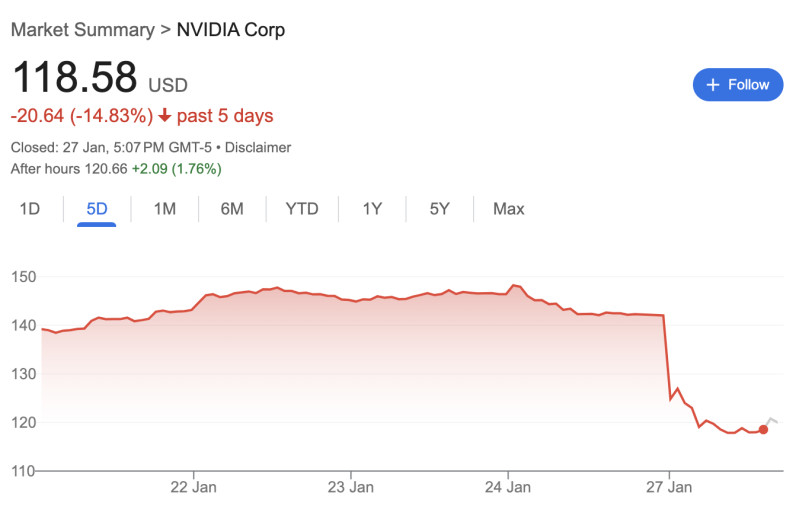
In the bustling trading floors and the digital interfaces of investors worldwide, the Nvidia share price sell-off has been the talk of the town. The tech giant, known for its prowess in graphics and artificial intelligence, has seen a dramatic downturn in its stock value, primarily attributed to recent economic indicators. The market is abuzz with the latest inflation data and how it has drastically affected stock futures today. Understanding the interplay between inflation and stock prices can provide crucial insights into Nvidia's current predicament.
The Impact of Inflation Data on Nvidia Stock
The recent sell-off of Nvidia shares can be traced back to the release of inflation data, which spurred a wave of volatility. Futures for the Dow Jones Industrial Average and other major indexes traded sharply lower in recent times, highlighting the jittery market sentiment. The hotter-than-expected inflation data has left investors on edge, prompting a reassessment of stock valuations, especially for high-growth tech companies like Nvidia.
Nvidia, a stalwart in the technology sector, has always been a favorite among investors for its cutting-edge innovations and robust earnings. However, recent economic indicators have forced a reevaluation of its market positioning. Investors are grappling with the implications of higher inflation on economic growth and corporate earnings, leading to a sell-off in tech stocks. According to available reports, the Personal Consumption Expenditures (PCE) data, a key measure of inflation, has been closely monitored as it directly impacts stock market futures.
In such an environment, the tech sector, which includes Nvidia, becomes particularly vulnerable. The company's valuation, which is already high, is now being scrutinized under the microscope of economic uncertainty. The latest inflation data has sent a clear message to investors: the economic landscape is shifting, and tech stocks, which have long been favored for their growth potential, may not be as immune to macroeconomic pressures as previously thought.
Analyzing the Sell-Off and Future Market Dynamics
Investors are now closely watching Nvidia's performance in the face of these macroeconomic challenges. The sell-off in Nvidia's stock can be seen as a broader market correction, with investors seeking safety in more stable assets. The volatility in stock futures today reflects the broader market's reaction to the recent inflation data.
This sell-off is not just about Nvidia; it's a symptom of the larger economic uncertainty gripping the market. The recent downturn in the S&P 500 and Nasdaq Composite further underscores the market's jittery state. Investors are now balancing the potential for continued high inflation with the prospect of future economic slowdown, making tech stocks like Nvidia more vulnerable to market fluctuations.
"Investors are reassessing their portfolios in light of the latest economic data, and tech stocks are particularly sensitive to these changes. Nvidia, with its high valuation and growth expectations, is feeling the brunt of this reassessment," said an industry analyst, highlighting the market's current nervousness.
The Road Ahead for Nvidia
Despite the sell-off, Nvidia remains a formidable player in the tech industry. The company's focus on artificial intelligence and graphics technology continues to drive innovation. However, the current market environment presents a challenge, and Nvidia will need to navigate these waters carefully.
For investors, the sell-off in Nvidia stock is a reminder of the interconnected nature of the global economy. The latest inflation data has served as a wake-up call, prompting a re-evaluation of investment strategies. As the market continues to grapple with these economic headwinds, Nvidia's future performance will be closely watched, not just for its stock price, but also for its broader implications on the tech sector.
How does this story make you feel?
 Up next · BusinessPCE Report Shows Unexpected Inflation Rise