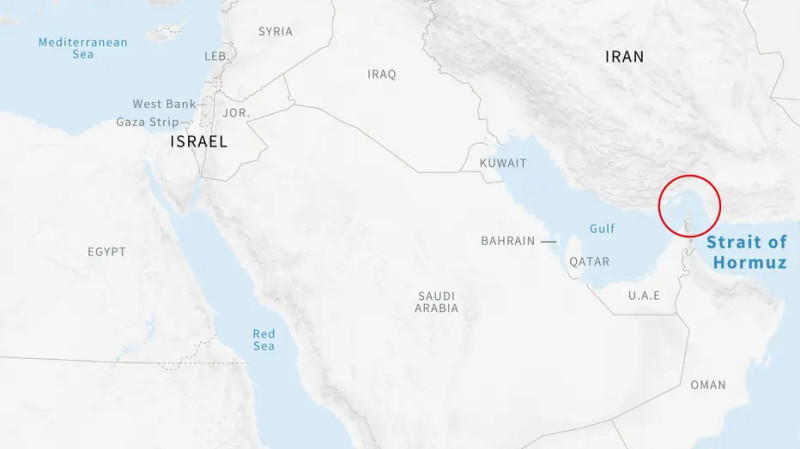
Tensions in the Strait of Hormuz have reached a boiling point, as Iran's recent attacks on ships have left the international community on edge. The narrow waterway, a critical artery for global oil trade, was thrust into the spotlight once again as both Iran and the U.S. clashed in a dangerous standoff.
The Latest Attacks: Iran’s Aggressive Moves
Iran has launched a series of aggressive attacks in the Strait of Hormuz, firing on three ships and seizing two of them. The escalation comes after U.S. President Trump extended a ceasefire, a move that seems to have emboldened Iran rather than deterred it. The Strait of Hormuz has long been a flashpoint in the Middle East, with its strategic importance as the only sea passage linking the oil-rich Persian Gulf to the Gulf of Oman and the Arabian Sea.
U.S. Response: Naval Blockade and Military Moves
The U.S. has responded to Iran's aggression with a naval blockade of the strait, a move aimed at exerting control over the vital waterway. The blockade comes amid a backdrop of heightened tensions, with both nations accusing each other of provocative actions. As a result, most ships in the region are currently at a standstill, paralyzing a significant portion of global trade.
Tensions are reaching a critical point as the U.S. deploys thousands of additional forces to the region. The U.S. Navy fired on an Iranian-flagged ship in a tense confrontation last week, further escalating the situation. This move has led to a tense standoff, with both nations refusing to back down.
Iran’s Proposed Deal and the Future of the Strait
Amidst the chaos, Iran has reportedly proposed a deal to the U.S. involving the reopening of the Strait of Hormuz and a delay in nuclear talks. The proposal, conveyed through Pakistani mediators, offers a potential path to de-escalation. However, the Strait of Hormuz remains closed for the time being, with the U.S. maintaining its blockade despite the proposed deal.
Think again. The situation in the Strait of Hormuz is not just about Iran and the U.S. It's about the global economy, the delicate balance of power in the Middle East, and the future of international trade. Iran’s aggressive actions are not just military maneuvers, but strategic moves aimed at exerting control over a crucial global choke point. What will the next move be, and who will blink first in this high-stakes game?
Only time will tell how this geopolitical chess game plays out. But for now, the world watches and waits, as the Strait of Hormuz remains a critical point of contention between Iran and the U.S, and the global economy holds its breath. As the world watches the unfolding drama, it is important to remember the historical parallels, such as the 1980s Iran-Iraq War, where the Strait of Hormuz was a key battleground, and the implications it had on global energy security.
"The Strait of Hormuz is a crucial choke point for global energy security, and any disruption in this region has far-reaching consequences on the global economy," said an expert on Middle Eastern affairs. "Both Iran and the U.S. are playing a dangerous game, and the world is watching closely to see how this will unfold."