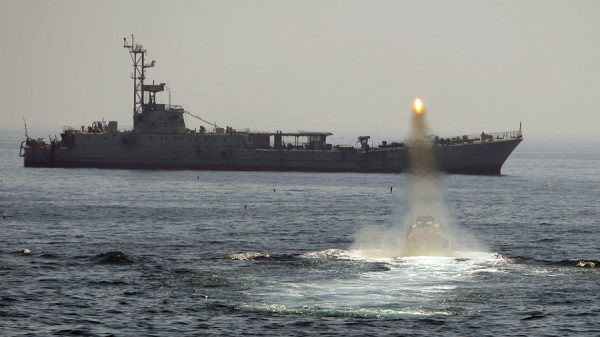
The Strait of Hormuz is a narrow passageway between the Persian Gulf and the Gulf of Oman, a vital artery through which a significant portion of the world's oil supply flows. Today, the area is once more at the epicenter of global geopolitical tensions, as Iran's recent actions have put the international community on edge. As the sun sets over the bustling waters of the Strait of Hormuz, the tension is palpable, with ships inching cautiously through the narrow channel, eyes fixed on the horizon for any sign of trouble. This chokepoint, where roughly 20% of the world's oil supply passes, has been a focal point of conflict for decades, and the current standoff between Iran and the United States is no exception. The United States has been in the news for its "Project Freedom" initiative, aimed at ensuring the safety of global shipping lanes and maintaining the free flow of oil.
Strait of Hormuz: Navigating the Turbulent Waters of Geopolitics
At the heart of the recent conflict is Iran's announcement of "new rules" for navigating the Strait of Hormuz, a move that has sparked worry and concern among global shipping companies and oil producers. The U.S. has responded by maintaining its naval blockade, a stance that has further complicated efforts to restore normalcy to the region. According to a U.S. official, who spoke on the condition of anonymity, "The situation is volatile, but we're committed to keeping the strait open and ensuring the safety of global shipping." This commitment, however, is met with skepticism from Iran, which has repeatedly accused the U.S. of overstepping its bounds in the region.
In a recent statement, Iran's Revolutionary Guard asserted that the Strait of Hormuz would remain open, but with new guidelines that ships must adhere to. As of now, it's unclear how much these changes will affect global shipping, but analysts are already predicting a potential spike in oil prices as a result of the uncertainty.
Project Freedom: Trump's Gambit to Secure the Strait of Hormuz
President Trump's "Project Freedom" is a bold initiative aimed at countering Iran's influence in the region. On Wednesday, the U.S. launched a series of coordinated attacks on Iranian military sites, a move that was met with swift retaliation from Tehran. The U.S. official stated, "These actions were necessary to send a clear message to Iran that we will not tolerate their aggressive behavior." But as the dust settles, the question remains: will this escalation bring the world any closer to a resolution, or will it only serve to deepen the divide?
The U.S. has long sought to reopen the Strait of Hormuz to unrestricted shipping, but its efforts have been met with stiff resistance from Iran. Iran has repeatedly accused the U.S. of exploiting the crisis to assert control over the region's oil reserves, a claim that the U.S. vehemently denies. "We are not in the business of colonizing other nations. Our goal is to ensure the free flow of oil and maintain global energy security."
Rising Tensions in the Persian Gulf
The Strait of Hormuz isn't just a vital trade route—it's a hotspot for geopolitical tensions. The U.S. and Iran have been locked in a standoff over control of the strait, with each side accusing the other of destabilizing the region. The recent attacks have only served to heighten the volatility, as both sides dig in their heels and refuse to back down. Iran accuses the U.S. of using the crisis to assert control over the region's oil reserves, while the U.S. maintains that its actions are aimed at ensuring the free flow of oil.
The U.S. has long sought to reopen the Strait of Hormuz to unrestricted shipping, but its efforts have been met with stiff resistance from Iran. iran has repeatedly accused the U.S. of exploiting the crisis to assert control over the region's oil reserves, a claim that the U.S. vehemently denies. In a recent statement, an Iranian official said, "Their actions are nothing more than a thinly veiled attempt to seize control of our resources."
As the Strait of Hormuz once again finds itself at the center of a global storm, the world watches with bated breath, hoping that a diplomatic solution can be found before the situation spirals further out of control. With oil prices already on the rise, the stakes have never been higher. Yet, amidst the chaos, there are signs of hope. On Saturday, 19 vessels successfully navigated the strait, a positive sign that the crisis may be easing.
Iran has repeatedly accused the U.S. of exploiting the crisis to assert control over the region's oil reserves, a claim that the U.S. vehemently denies. In a recent statement, an Iranian official said, "Their actions are nothing more than a thinly veiled attempt to seize control of our resources."
As the U.S.-Iran standoff continues, the world awaits the next move in this complex geopolitical game. For now, the Strait of Hormuz remains a vital artery for global energy security, a chokepoint where the fate of the world's economy hangs in the balance.
"The Strait of Hormuz is a vital passageway for global energy security, and any disruption to its operation has far-reaching consequences. It's a delicate situation, and we need to tread carefully to ensure the safety of global shipping and the stability of the region."