B-1 Bomber: The Aging Titan of the US Air Force
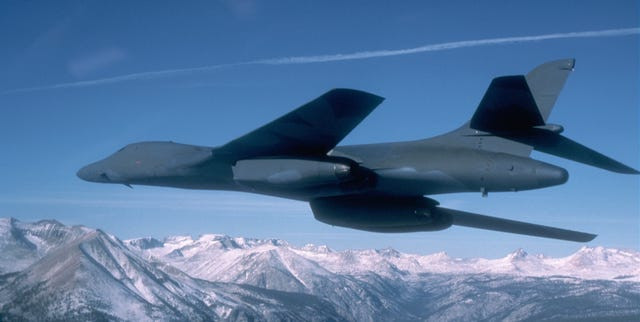
The Rockwell B-1 Lancer, affectionately known as the "Bone," is a B-1 bomber that has been a cornerstone of the United States Air Force's strategic arsenal since 1986. Despite its age, the B-1B Lancer remains an essential piece of the Air Force's strategic deterrent, though it faces increasing challenges as newer technologies and more capable aircraft emerge.
The Legacy and Mission of the B-1 Lancer
The B-1 bomber was initially designed as a nuclear deterrent to replace the workhorse B-52 Stratfortress. With a payload capacity of up to 75,000 pounds, the B-1B Lancer is capable of delivering both conventional and nuclear weapons over long distances. The B-1A version was initially designed to reach Mach 2 speeds at high altitudes but was later redesigned to focus on high-speed, low-altitude penetration of radar-guided air defenses.
The Lancer's multi-mission capabilities are well-suited to various military scenarios, from precision strikes in contested airspace to long-range bombing missions. It is part of the US Air Force’s triad of long-range bombers, alongside the B-2 Spirit and the B-52 Stratofortress.
The Aging Bone: Challenges and Future
The B-1B Lancer has been in service for nearly four decades, and its aging frame is beginning to show. The aircraft requires extensive maintenance and upgrades to keep up with modern threats. As air defenses evolve, the B-1 bomber faces a significant challenge: its survivability in high-end conflicts against modern integrated air defenses.
One of the most pressing issues is the cost and difficulty of maintaining such an aging fleet. Unlike the B-52, which can launch stand-off weapons from extreme ranges, the B-1's maintenance-intensive nature makes it less viable in future wars.
To counter this, the United States Air Force is increasingly turning to the B-21 Raider, a next-generation stealth bomber designed to replace both the B-1 and B-2 bombers. The B-21 is expected to offer superior stealth capabilities and reduced maintenance requirements, positioning itself as a more viable option for future conflicts.
The Strategic Role of the B-1 Lancer in Modern Warfare
Despite its limitations, the B-1B Lancer continues to play a crucial role in modern warfare. Its ability to carry a large conventional payload and operate in hostile airspace makes it a valuable asset for long-range bombing missions.
The aircraft's recent return to RAF Fairford in Gloucestershire is a testament to its enduring relevance. Deployed during the Israeli-US war on Iran, the B-1's presence underscores its continued strategic importance.
Yet, let's not kid ourselves, the B-1 bomber is a relic of a bygone era. Its nuclear capability has been significantly reduced, and it is no longer a primary nuclear deterrent. The aircraft's nuclear payload was removed in 2007, making it a purely conventional bomber capable of delivering precision-guided munitions.
Here's what nobody's asking: with the B-52 and B-2 still in service, does the B-1 really have a future? The Air Force’s decision to focus on the B-21 Raider suggests that the days of the B-1 bomber may be numbered. As newer, more advanced aircraft take center stage, the B-1's role may increasingly be relegated to training and support missions.
The B-1 bomber is a symbol of America's military might, a reminder of the Cold War era when the threat of nuclear war loomed large. As we look to the future, the B-1 bomber will undoubtedly play a diminished role in the US Air Force's strategic arsenal, but its legacy remains an enduring testament to the evolution of military technology.
"The B-1 Lancer is a testament to American ingenuity and military prowess, but it’s clear that its time in the spotlight is waning. As we look to the future, the B-21 Raider will likely take its place as the new flagbearer of American air power."
How does this story make you feel?
 Up next · TechSamsung Unleashes Galaxy Z Fold 8 Ultra at London Unpacked Event