Chicago Bakes Under Extreme Heat Wave

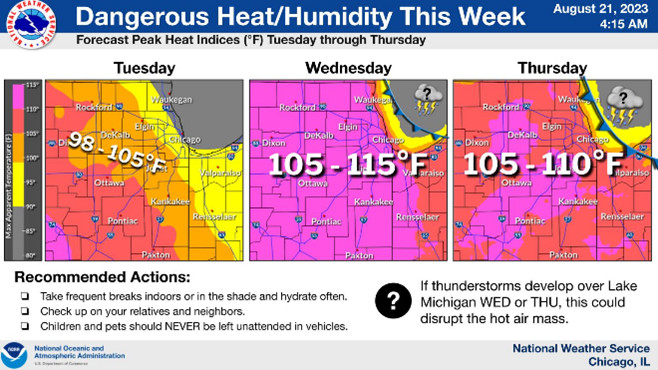
As the mercury soars, Chicagoans brace for another day of sweltering temperatures on this July 27, 2026. The National Weather Service has issued an Extreme Heat Warning, pushing the city to its limits with a heat index that could reach a staggering 115 degrees. The city’s Office of Emergency Management and Communications (OEMC) is on high alert, urging residents to stay vigilant and prepared for the relentless heatwave.
Extreme Heat Warning: What Does It Mean for Chicago?
The extreme heat warning is more than just a weather advisory. The City of Chicago’s OEMC has issued a clear call to action, outlining the potential risks of the impending heatwave. The heat index, which combines temperature and humidity, is forecasted to make it feel like 105 degrees or higher in some parts of the city. This means that the risk of heat-related illnesses, such as heat exhaustion and heatstroke, is significantly elevated. The OEMC has warned that extreme heat conditions can lead to a surge in emergency calls, straining city resources and healthcare systems.
Severe Weather Threats Beyond Heat
In addition to the extreme heat, residents and visitors need to be mindful of the potential for severe thunderstorms. The National Weather Service has warned of possible thunderstorms with strong wind gusts and large hail. These storms could exacerbate an already challenging situation, with the combination of heat and severe weather posing a substantial threat to public safety. The OEMC has stressed the importance of staying informed through trusted sources and heeding all weather alerts.
The OEMC is issuing heat safety graphics and information to help the public understand the dangers of extreme heat. "Heat-related illnesses increase significantly during extreme heat and high humidity events.
— City of Chicago OEMC Heat Safety Graphics and Information for Sharing
This warning is in effect for the entire Chicago area. Residents are being advised to stay indoors during peak hours, use air conditioning whenever possible, and drink plenty of water. Public spaces like libraries, community centers, and cooling centers are open to those in need of respite from the heat. The city’s Emergency Operations Center is working around the clock to monitor the situation and provide updates to the public.
In the midst of this heatwave, it’s crucial to remember that Chicago has faced extreme weather conditions before. The ongoing extreme weather is a stark reminder of the increasing frequency and severity of such events, which scientists link to climate change.
How does this story make you feel?
 Up next · WorldAftermath of the Appleton Tornado: A Community in Crisis