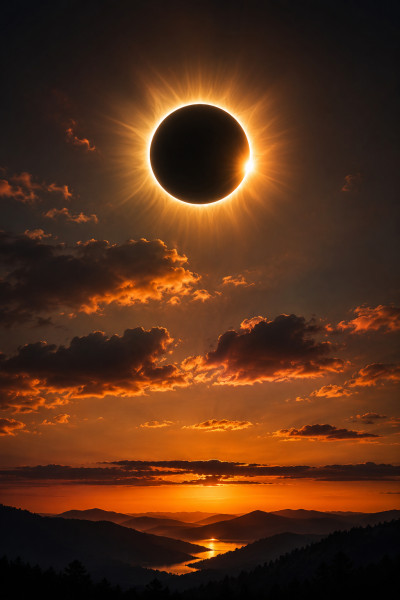
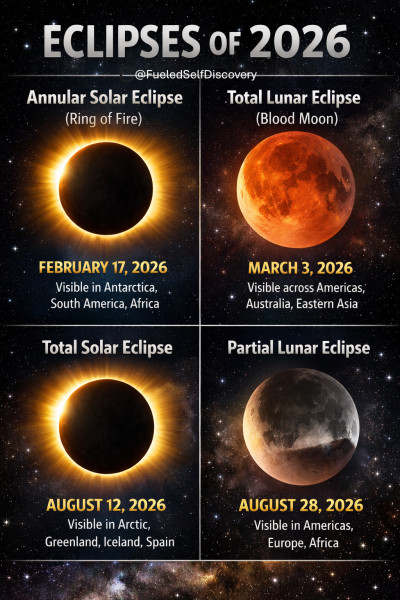
Solar Eclipse 2026: The Total Solar Eclipse On August 12
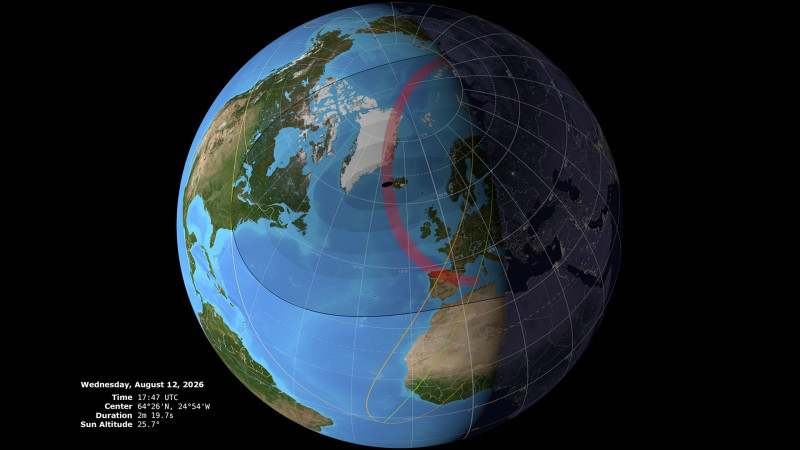
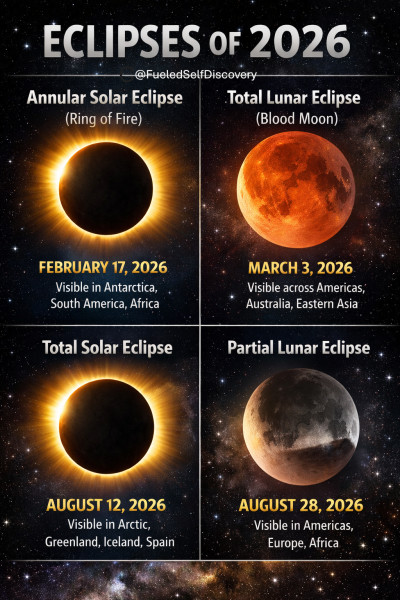
Sky watchers are abuzz over the upcoming total solar eclipse on August 12, 2026. This celestial event, a total eclipse, will sweep across Greenland, Iceland, northern Russia, the Atlantic Ocean, Spain, and a small corner of Portugal.
The Path of Totality and Visibility
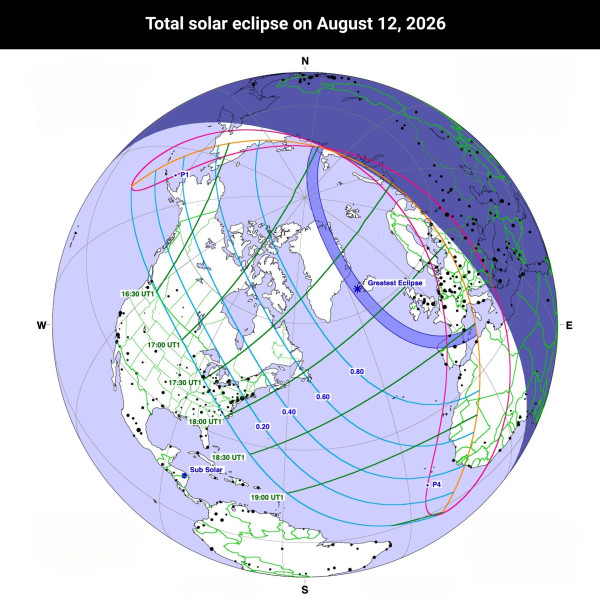
The total solar eclipse 2026 will trace a path that begins over the Arctic Ocean, crossing Greenland, Iceland, and then moving south to Spain and northern Portugal. The path of totality, where the sun will be completely obscured by the moon, will also include parts of the Atlantic Ocean and northern Russia. This is a rare celestial event, and those who find themselves in the path of totality are in for a spectacular show.
For those outside the path of totality, a partial solar eclipse will still be visible. In the UK and Ireland, observers will see over 90% of the sun obscured, offering an impressive partial eclipse experience. The eclipse will also be visible in parts of northern Europe, where the moon will cover a significant portion of the sun.
Timings and Local Viewing
For those eager to witness the total solar eclipse, timings will vary depending on location. The maximum eclipse will occur at 15:45:55 local time at the Greatest Eclipse Point, with the totality phase lasting approximately 2 minutes and 19 seconds. Viewers in the path of totality will experience a few minutes of total darkness as the moon completely covers the sun, revealing the sun's corona, a sight not to be missed.
The eclipse will also be visible to nearly one billion people who will see a partial solar eclipse, with 15 million in its path of totality. Exact timings and viewing rules can be found on various astronomy websites, including NASA's official page, which provides detailed maps and local times.
Scientific Significance and Public Interest
This total solar eclipse 2026 is not just a visual spectacle but also a significant event for astronomers and scientists. The eclipse offers a unique opportunity to study the sun's corona, which is only visible during totality. NASA and other scientific organizations are likely to conduct various experiments during the eclipse, adding to the scientific knowledge about the sun and its atmosphere.
Public interest in the total solar eclipse 2026 is high, with many travelers and enthusiasts planning to be in the path of totality. The event is drawing attention not only from astronomers but also from general stargazers and adventure seekers.
One counter-argument to the excitement is the unpredictability of weather conditions. Cloud cover can significantly affect visibility, and astronomy enthusiasts are advised to check local weather forecasts and plan accordingly.
The eclipse raises questions about future celestial events. With increasing awareness and technology, how will future eclipses be studied and experienced? The data is damning — future eclipses will likely see even more sophisticated observation methods and broader public participation. The next eclipse is already on the horizon, and the world is ready to witness another cosmic ballet.
How does this story make you feel?
 Up next · ScienceDebunking the Project Anchor Hoax: Earth Losing Gravity for 7 Seconds? NASA Sets the Record Straight