Solar Eclipse 2026: A Celestial Spectacle Sweeps Across the Earth
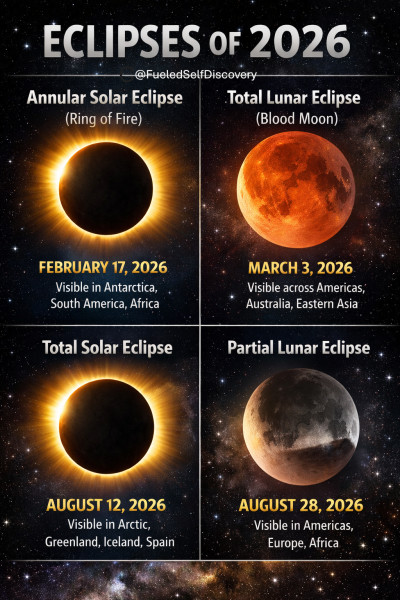
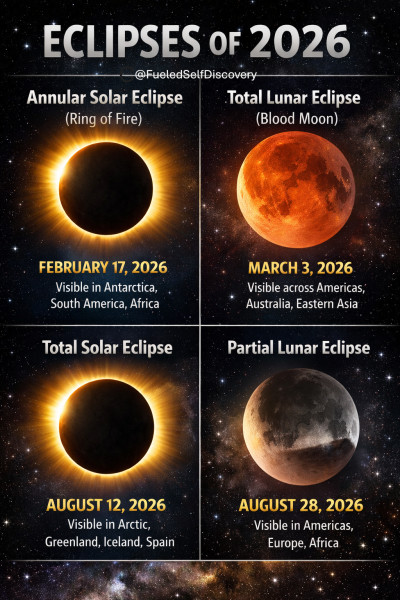
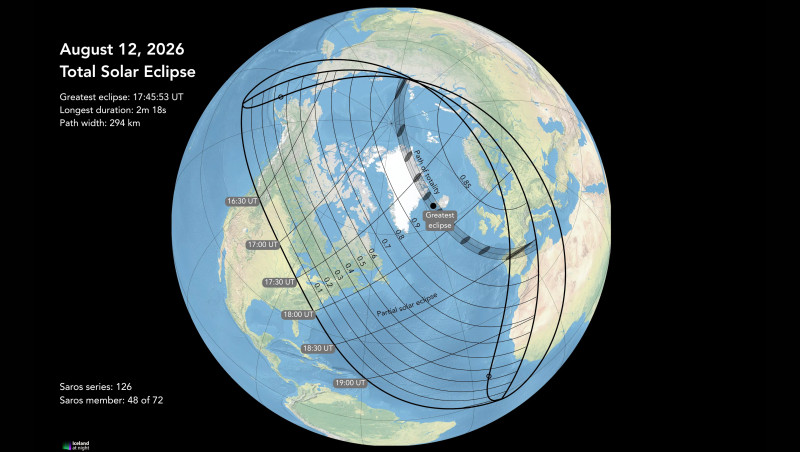
The celestial phenomenon of the total solar eclipse on August 12, 2026, is poised to be one of the most anticipated astronomical events of the decade. This rare occurrence promises to captivate millions with its breathtaking display, visible from Greenland, Iceland, northern Russia, the Atlantic Ocean, Spain, and a small corner of Portugal. Historically, such events have been both awe-inspiring and scientifically significant, providing unique opportunities for researchers and enthusiasts alike to delve into the mysteries of our universe. To understand the significance of this solar eclipse of August 12, let's delve into its path, the times it will be visible, and the broader implications of this natural wonder.
The Path of the Eclipse: A Journey Across the Globe
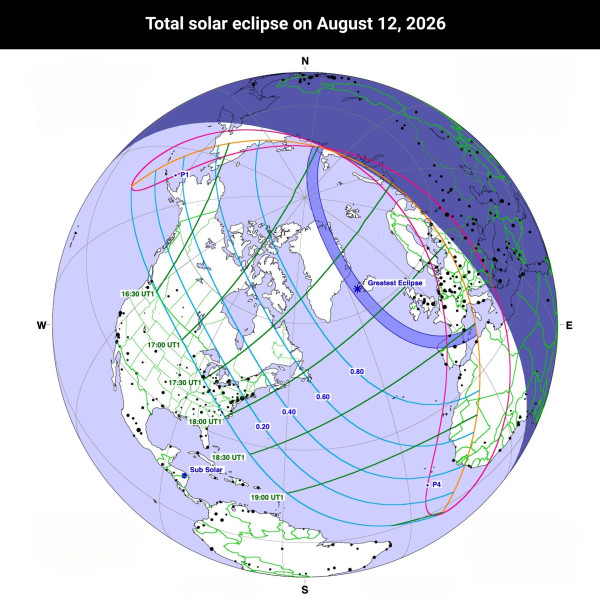
On this August 12 the solar eclipse will trace a path across some of the world's most diverse landscapes, starting from Greenland and Iceland, then sweeping through northern Russia, the Atlantic Ocean, and finally touching down in Spain and Portugal. This trajectory is of particular interest as it marks the first total solar eclipse to cross mainland Europe in 27 years, and the first over Spain since 1905. Such rare alignments are not just cosmetic; they offer a unique glimpse into the Earth-Moon-Sun interaction and have historically been used to study the Sun's corona, a region typically invisible to the naked eye. For those in the path of totality, the experience will be nothing short of extraordinary. This eclipse is set to last up to two minutes, giving viewers a precious window to observe the Sun's corona and other solar phenomena.
The Phenomenon of August 12: Timing and Visibility
For those eager to witness this solar eclipse on August 12, the exact timing and visibility will vary depending on the location. The eclipse begins with the first contact, where the Moon's shadow starts to obscure the Sun. For example, in Iceland, the eclipse will reach totality around late morning, while in Spain, it will occur in the mid-afternoon. Viewers outside the path of totality, such as those in Europe and parts of North America and Africa, will experience a partial eclipse. Understanding the precise times of the eclipse and the duration of totality is crucial for both amateur and professional astronomers, as it allows for precise planning and observation.
Scientific and Cultural Implications of the Solar Eclipse
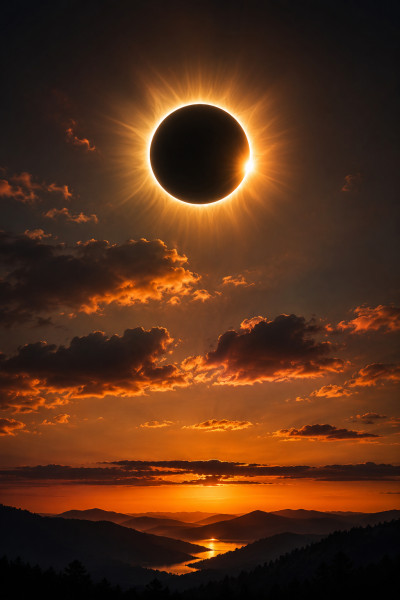
While the total solar eclipse 2026 is undoubtedly a spectacle of natural beauty, it also holds significant scientific value. Historically, solar eclipses have provided scientists with unparalleled opportunities to study the Sun's outer atmosphere, known as the corona. This region is much hotter than the Sun's surface, and understanding why it remains a mystery. During the eclipse, the Moon's shadow blocks out the Sun's bright light, revealing the corona and providing a rare chance to study this elusive phenomenon. Additionally, the eclipse offers insights into the Earth's response to the sudden darkness, including changes in temperature and atmospheric conditions. However, the eclipse also holds cultural and emotional significance. It brings people together, fosters a sense of wonder, and inspires curiosity about the cosmos. Events like this remind us of our place in the universe and the interconnectedness of all things. To some, it’s a moment of reflection, a time to contemplate the grandeur and mystery of the natural world. But to others, it’s a chance to appreciate the beauty of our planet and the celestial bodies that orbit it. One can argue that the total solar eclipse 2026 is a reminder of the power of nature and the need for continued exploration and understanding.
How to Experience the Eclipse Safely
While the total solar eclipse 2026 is an awe-inspiring event, it’s crucial to prepare for it safely. Directly viewing the Sun without proper eye protection can cause serious and permanent eye damage, including blindness. The only safe way to look directly at the Sun is through special-purpose solar filters, such as eclipse glasses or handheld solar viewers. These filters are designed to comply with the ISO 12312-2 international safety standard, which ensures they are safe for direct solar viewing. It’s also important to inspect your solar filter before use, ensuring it is not scratched, punctured, or otherwise damaged. Traditional sunglasses, even those with very dark lenses, are not safe for viewing the Sun. Additionally, homemade filters or ordinary sunglasses are not adequate for safe solar viewing. For those without access to proper protective gear, indirect viewing methods such as pinhole projectors or binoculars with solar filters are viable alternatives. By taking these precautions, observers can fully enjoy the eclipse while protecting their vision.
With the solar eclipse of August 12 fast approaching, let’s not kid ourselves—this is a celestial event of epic proportions. The anticipation is palpable, and the scientific and cultural significance cannot be overstated. Yet, amidst the excitement, the question remains: how will this eclipse shape our understanding of the cosmos and our place within it? As the Moon's shadow sweeps across the globe, will we find new answers to age-old questions, or will it simply reinforce our awe of the universe's vastness and mystery? One thing is certain: the solar eclipse 2026 will leave an indelible mark on all who witness it. Will you be one of them?
How does this story make you feel?
 Up next · ScienceWitnessing a Celestial Phenomenon: The Total Solar Eclipse of 2026