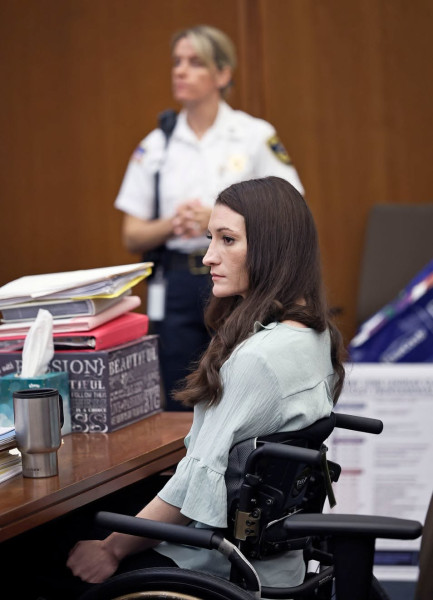
Lindsay Clancy Murder Trial: Emotional Day 12 Unfolds

Lindsay Clancy, a 36-year-old mother from Duxbury, Massachusetts, stands accused of a horrifying crime: the murder of her three young children. As the trial enters its 12th day, the emotional toll on Clancy and those involved becomes increasingly palpable. The courtroom drama unfolds as medical examiners and mental health clinicians take the stand.
Clancy's Emotional Outburst and Courtroom Drama
Wednesday marked a tumultuous day for the trial, as Clancy's emotional state became a focal point. The courtroom echoed with her sobs as she visibly struggled to maintain composure during the graphic testimony from the medical examiner. Clancy's outbursts led to multiple breaks, with the judge calling for pauses to allow her to regain control. At one point, Clancy was heard saying, "I can't do it," her anguish palpable to all present.
This emotional turmoil underscores the complexity of the case, where the defense is probing a prosecution theory that involves a phone and the possibility of Clancy hearing voices. The graphic nature of the testimony, which detailed the injuries sustained by her children, added to the charged atmosphere.
Testimonies and Defense Strategies
The medical examiner's testimony provided a harrowing account of the autopsies. The doctor from the state medical examiner's office delivered detailed and graphic descriptions of the children's injuries, a necessary but harrowing part of the prosecution's case. The defense, however, sought to introduce a different narrative, focusing on Clancy's mental state and the possibility of auditory hallucinations.
The defense's strategy appears to be centered around establishing that Clancy may have been acting under the influence of voices or other mental health issues at the time of the incident. This tactic aims to paint a picture of a woman driven to unimaginable acts by forces beyond her control.
The live updates from the courtroom paint a vivid picture of a trial that is as much about the legal proceedings as it is about the human drama unfolding within. The emotional outbursts, the detailed medical testimony, and the strategic maneuvers by the defense all contribute to a trial that is both tragic and compelling. This is a case that has captivated the public, and the unfolding drama is likely to continue as more testimonies are presented.
As the trial progresses, the focus on Clancy's mental health and the circumstances leading up to the tragic events becomes increasingly clear. The defense's emphasis on her mental state suggests that the trial is not just about the facts of the case, but also about understanding the complex web of emotions and psychological factors that may have driven her actions.
What Lies Ahead for the Trial and Clancy's Future?
As the trial continues, the question on everyone's mind is: what does the future hold for Lindsay Clancy? The emotional outbursts, the detailed medical testimonies, and the strategic defense maneuvers all hint at a complex and multifaceted case. The legal battle is far from over, and the outcome remains uncertain.
Will the defense's strategy of focusing on Clancy's mental state sway the jury? Or will the prosecution's case, built on the grim realities of the children's autopsies, prevail? The answers to these questions will shape not only the legal fate of Lindsay Clancy but also the broader narrative of a mother accused of the unthinkable.
Think again. This trial is not just about a crime; it's about the fragile line between sanity and madness, and the profound impact of a mother's mental anguish on a family's future. The courtroom drama continues, and the world watches, hoping for answers that may never fully satisfy the depths of this tragedy.
How does this story make you feel?
 Up next · WorldUkraine's Volodymyr Zelenskyy Claims Major Naval Victory in the Black Sea