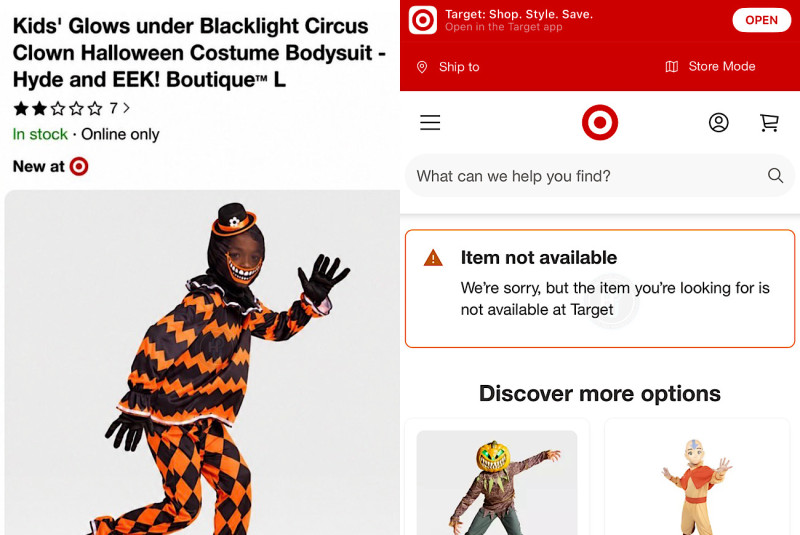
Target's Circus of Controversy: Halloween Costume Sparks Racial Backlash
Imagine a roller coaster where the thrill is not in the twists and turns, but in the sudden descent into a public relations nightmare. This is the latest ride Target has found itself on, as a Halloween costume has sparked a fierce backlash. The Minneapolis-based retailer, no stranger to controversies, finds itself once again in the eye of the storm due to an offensive costume that critics say evokes racist imagery.
A Clownish Misstep: The Costume at the Center of the Storm
Target's recent Halloween costume controversy centers around a children's clown costume that, according to critics, resembled blackface and minstrel shows. The costume, designed to depict a circus clown, was quickly pulled from sale after widespread criticism.
The backlash against the costume was swift and severe, with many accusing the retailer of promoting racist imagery and insensitive representations of Black culture. The costume's resemblance to the racist caricatures of the Jim Crow era, known as minstrel shows, drew particular scorn.
Target, in response, quickly removed the costume from its shelves and issued an apology. The company acknowledged the offensive nature of the costume and expressed remorse for any hurt it may have caused.
A Pattern of Controversies: Target's Struggle with Inclusivity
The Halloween costume controversy is not an isolated incident for Target. The retailer has faced numerous controversies in recent times, particularly concerning its handling of diversity, equity, and inclusion (DEI) initiatives and responses to racial issues.
Last year, for instance, activists called for a boycott of the company after Target decided to walk back on its DEI initiatives. The decision was met with widespread criticism, and many saw it as a betrayal of the company's commitment to social justice.
This latest controversy adds to a growing list of incidents where Target has found itself on the wrong side of the conversation about racial sensitivity and inclusivity. The company's handling of the situation has been a hot topic of debate, with some arguing that it is not doing enough to address the concerns of its diverse customer base.
In a statement, Target said, "We sincerely apologize for any offense this may have caused. We are committed to creating a more inclusive environment and will be reviewing our internal processes to ensure that such incidents do not happen again."
The Power of Public Outcry: How Social Media Shapes Corporate Responsibility
The swift action taken by Target in response to the backlash highlights the growing power of social media in shaping corporate responsibility. In recent times, public outcry on platforms like Twitter and Instagram has forced companies to take swift action to address controversial issues.
As Target continues to navigate the complexities of racial sensitivity and inclusivity, the latest controversy serves as a stark reminder of the importance of thoughtful representation and the potential consequences of falling short. For now, the company must focus on rebuilding trust and regaining the confidence of its diverse customer base.
As Target grapples with the fallout from its latest controversy, one question lingers: Will the company's response be enough to quell the backlash, or is this just the beginning of a larger reckoning for the retailer?
How does this story make you feel?
 Up next · EntertainmentTarget Halloween Costume Controversy: Controversial Minstrel Clown Outfit Sparks Outrage