Boomer net worth rises 38%, while households under 35 decline 23%
A Federal Reserve survey shows older adults’ median net worth jumped 38% from 2022 to 2025, while households under 35 saw a 23% decline, widening the generational wealth gap.
Key points
- Households headed by those 75+ saw a 38% rise in median net worth between 2022 and 2025.
- Households under 35 experienced a 23% decline in median net worth over the same period.
- The gap reflects higher home equity, retirement savings, and market gains for older adults versus student debt and housing costs for younger adults.
- The disparity may affect consumer spending, with older adults driving demand for healthcare and luxury goods and younger adults having less disposable income.
- Policymakers face challenges in addressing the widening wealth divide between generations.
The latest survey of consumer finances paints a picture as stark as a Monet, where the colors of wealth and poverty are separated by a vast chasm of age. The Federal Reserve's report reveals a dramatic shift in the economic landscape, where the boomer generation is basking in the sun of prosperity, while younger adults are left in the shadows of financial struggle.
The Generational Divide: Boomers vs. Young Adults
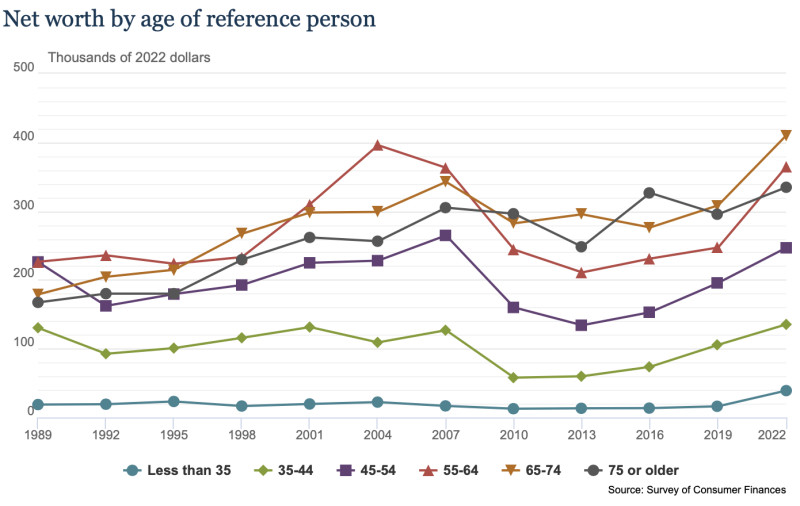
The Federal Reserve's latest survey of consumer finances has laid bare a profound age split in net worth, highlighting the widening wealth gap between different age groups. According to the 2025 Survey of Consumer Finances, households headed by individuals aged 75 or older saw a remarkable 38% increase in their median net worth between 2022 and 2025. This surge in wealth contrasts sharply with the financial fortunes of younger adults, who have experienced significant financial setbacks during the same period.
The data from the survey underscores the growing economic disparity, where the median net worth for households under 35 years old has declined by 23%. This drop is a stark indication of the financial pressures faced by younger generations, including rising living costs, household debt, and unequal participation in financial markets.
This divide is not just a matter of numbers but a reflection of broader economic trends. Younger adults are often saddled with student loans and higher housing costs, which can severely limit their ability to build wealth. In contrast, older adults have had more time to accumulate assets, benefit from accumulated home equity, and see their investments grow.
The Wealthy Boomer Phenomenon
The recent surge in wealth for older adults, particularly those aged 75 and above, has been nothing short of a boomer bonanza. According to the Federal Reserve, households in this age group have seen their median net worth rise by 38% recently, making them the wealthiest age group in the nation. This phenomenon can be attributed to a combination of factors, including the growth of retirement savings, increased home values, and the benefits of long-term investments.
The wealthiest boomers, many of whom have reached the peak of their earning potential, have also benefited from favorable market conditions and decades of economic growth. Many in this age group have had the privilege of participating in the stock market's bull runs and enjoying the fruits of capital appreciation in their retirement portfolios.
However, this wealth disparity raises questions about the economic future for younger generations. As older adults continue to accumulate wealth, the financial burdens on younger adults, such as rising housing prices and student loan debt, make it increasingly difficult for them to build a secure financial future.
Yet, the generational wealth gap is a complex issue, and addressing it will require a multifaceted approach. Policymakers, economists, and society at large must grapple with the challenges posed by an aging population and a younger generation struggling to keep up. Will the boomer bonanza be a harbinger of a more unequal future, or can policies be implemented to bridge this widening chasm?
The Economic Implications
The survey of consumer finances also sheds light on the broader economic implications of this generational wealth divide. As older adults continue to accumulate wealth, their spending habits and investment patterns will have a significant impact on the economy. This could lead to increased demand for certain sectors, such as healthcare and luxury goods, while younger adults' reduced spending power may limit growth in other areas.
The economic implications of this wealth divide are far-reaching. For instance, the housing market is heavily influenced by the financial status of different age groups. Older adults, with their increased wealth, are more likely to invest in real estate, driving up prices and making it even harder for younger adults to enter the market.
Moreover, the wealth gap can influence consumer spending, which is a critical driver of economic growth. Younger adults, constrained by financial pressures, may have less disposable income to spend on goods and services, potentially slowing down economic growth. In contrast, older adults, with their higher net worth, may spend more, contributing to economic activity.
This wealth disparity also has social and political implications. The growing economic divide can lead to increased social tension and political polarization, as younger generations may feel marginalized and left behind by the economic system. Addressing these issues will require thoughtful policy interventions and a commitment to economic equity.
In recent times, experts have started discussing the concept of an 'oldigarchy' where wealth and power are increasingly concentrated among older adults, potentially leading to a political and economic landscape where younger generations have less influence.
“The wealth gap is the most significant issue facing the U.S. today. It affects everything from consumer spending to political engagement, and its effects will be felt for generations to come.”
So, the next time you hear about the survey of consumer finances, remember that it's not just about numbers—it's about the lives behind those statistics, a tale of two generations, one basking in the sun of prosperity, the other left in the shadows of financial struggle.
Your questions, answered
How much did the median net worth of households 75 and older increase?
The median net worth of households headed by individuals aged 75 or older increased by 38% between 2022 and 2025.
What is the decline in median net worth for households under 35?
Households under 35 years old saw a 23% decline in median net worth during the same period.
Quick poll
Do you think policies should target reducing the generational wealth gap?
0 votes
How does this story make you feel?
Topics
 Up next · BusinessDunkin' gives free bat‑winged cup sleeve with Berry Battie Daydream Refresher