Riemann Hypothesis: AI's Quantum Leap in Mathematical Proofs
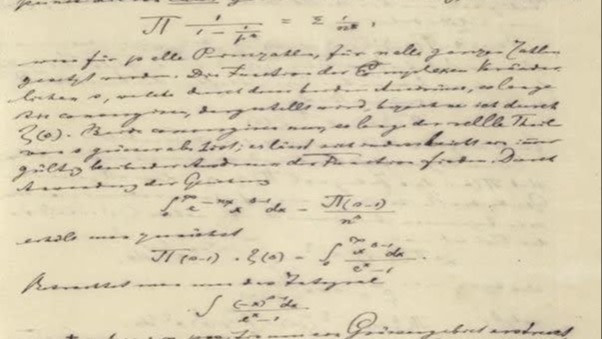
Imagine a labyrinth of logic, meticulously constructed over centuries by the world's brightest minds. This labyrinth is mathematics, and at its heart lies the enigmatic Riemann Hypothesis. Recently, a seismic shift in this labyrinth may have occurred, thanks to an anthropic mathematician and an AI named Claude.
The Mathematician and the AILevent Alpöge, a mathematician at Anthropic, recently claimed to have found a proof for the Riemann Hypothesis using AI assistance. This conjecture, a key unsolved problem in number theory, has baffled mathematicians for over 165 years. Alpöge collaborated with AI Claude to develop a proof and released code, which mathematically verifies the proof.
This development is monumental. The hypothesis, if proven, would have far‑reaching implications not only in pure mathematics but also in fields like cryptography and computer science. It would provide a framework for understanding the distribution of prime numbers, a cornerstone of modern cryptographic systems.
The Proof and Its ImplicationsThe claim is not just about the original Riemann Hypothesis but also its generalized version, known as the Generalized Riemann Hypothesis (GRH). This broader conjecture deals with the zeros of Dirichlet L‑functions and has significant implications for number theory and beyond.
If the GRH is confirmed, it would resolve numerous open questions in number theory that currently assume its validity. This is where the Lean code comes into play—it provides formal verification of the proof, which is currently being scrutinized by experts worldwide.
Peer Review and the Road AheadThe mathematical community is abuzz with this claim. However, the proof must undergo rigorous peer review to be accepted. Lean experts are currently working to verify the code, ensuring that the proof indeed holds up to scrutiny. The process is painstaking, but the stakes are high.
As of now, the proof is being verified through formal methods, a process that could take some time. The mathematical community awaits the outcome with bated breath. If confirmed, this would be a historic moment, marking the first time a major mathematical conjecture has been solved with the help of AI.
A Promising Future for Mathematical AI
This recent development highlights the potential of artificial intelligence in solving complex mathematical problems. The collaboration between Alpöge and Claude showcases how AI can be used to tackle problems that have eluded human mathematicians for centuries.
The future of AI in mathematics looks promising. As AI continues to evolve, it could become an indispensable tool for mathematicians, helping to solve some of the most challenging problems in the field. This would not only advance our understanding of mathematics but also pave the way for new applications in various fields, from cryptography to computer science.
As the world watches and waits, one thing is clear: the Riemann Hypothesis has taken a step closer to being solved, and the anthropic mathematician and their AI companion may have just rewritten the future of mathematics.
How does this story make you feel?
 Up next · TechThe Great Divide: GTA 6's 99 Metascore vs. User Reviews' Shocking Fall