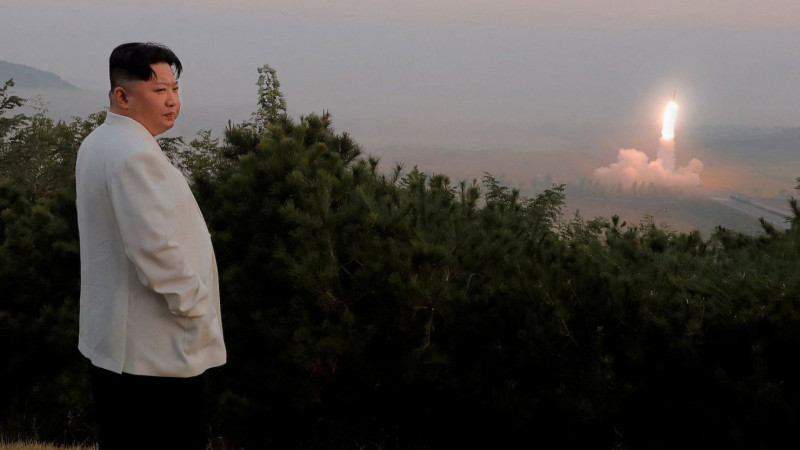
The world's attention is once again focused on North Korea as the isolated nation continues its aggressive stance on missile and nuclear development under the leadership of Kim Jong Un. On January 4, 2026, North Korea's leader oversaw the test launch of long-range strategic cruise missiles, reinforcing the country's commitment to its nuclear capabilities and counter-attack readiness. This latest development is part of a broader strategy by North Korea to assert its military prowess and deter potential threats.
Kim Jong Un's latest missile tests have been accompanied by calls for increased production of missiles, shells, and factories dedicated to their manufacture. The official Korean Central News Agency reported that the missile launches off the country's west coast were observed by Kim Jong Un himself, highlighting the strategic importance of these exercises. These actions serve as a clear message to the international community regarding North Korea's unyielding stance on its nuclear and missile programs.
North Korea's emphasis on developing its nuclear combat force is not new. Kim Jong Un has repeatedly stated that the country will continue to devote all its efforts to this goal. The recent tests of long-range strategic cruise missiles and the pledges for "unlimited" nuclear development further underscore North Korea's determination to enhance its military capabilities. These developments come amid international concerns over the potential escalation of tensions in the region.
In addition to cruise missile launches, North Korea has also made significant strides in other areas of missile technology. The successful test of a high-thrust solid-fuel missile engine using composite carbon fiber material for its long-range ballistic missiles is a notable achievement. This advancement indicates North Korea's ongoing efforts to improve the range, accuracy, and reliability of its missile arsenal, posing a significant challenge to regional and global security.
Moreover, North Korea's leader has called for more than doubling the production of tactical guided weapons during a recent visit to a munitions factory. This move suggests a broader strategy to enhance the country's military capabilities across various domains, not just in long-range missiles. The continued focus on missile production and testing underscores North Korea's commitment to maintaining a strong deterrent against perceived external threats.
As the international community watches North Korea's military maneuvers with growing concern, it remains to be seen how these developments will influence regional dynamics and diplomatic efforts. Kim Jong Un's aggressive stance on missile and nuclear development is likely to shape future negotiations and relations with neighboring countries and global powers. The world will continue to monitor North Korea's actions closely, hoping for a path towards peace and stability in the region.