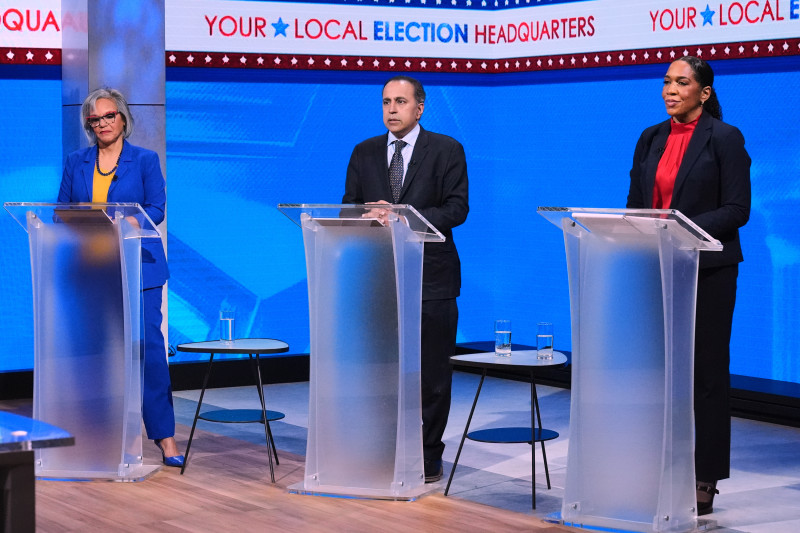
The Illinois political scene is ablaze with intrigue as Lt. Gov. Juliana Stratton navigates the choppy waters of AIPAC's influence, Daniel Biss faces unexpected attacks, and the AIPAC lobby flexes its muscles in the Democratic primaries.
Stratton's Corporate Conundrum: Grassroots vs. Big Donors
Lt. Gov. Juliana Stratton's campaign for the Senate seat has been marred by revelations that she accepted millions from corporate donors despite her promises to fund the bid through grassroots efforts. This contradiction has sparked debates about political integrity and the influence of corporate money in politics.
Meanwhile, Fairshake's Protect Progress has poured $435,000 into ads boosting her opponents and attacking Stratton, indicating a shift in the dynamics of the race. These developments raise questions about the role of crypto and AI in political donations and the transparency of political funding.
Stratton's relationship with Gov. JB Pritzker, who has been a significant fundraiser, adds another layer of complexity. Pritzker's influence and the strategic positioning of Stratton's campaign are under scrutiny as the primaries approach. The interplay between corporate donations, AI-driven political strategies, and traditional grassroots fundraising is reshaping the political landscape in Illinois.
AIPAC's Target: Daniel Biss and the Surprising Attacks
Evanston Mayor Daniel Biss, a progressive candidate, has found himself in the crosshairs of AIPAC-aligned groups. Despite his pro-Israel stance and belief in Israel's right to exist, Biss has been attacked for his criticism of military aid and his support for a two-state solution.
This aggressive targeting by AIPAC raises questions about the limits of political discourse and the tactics used by powerful lobbies. Biss's mother being born in Israel has not shielded him from these attacks, highlighting the complexities of identity and political affiliation in modern politics.
"Aipac-aligned groups have begun attacking Daniel Biss, a Jewish candidate who believes in Israel's right to exist," said a spokesperson for Biss's campaign. The true story behind these attacks and the broader implications for the democratic process in Illinois are yet to unfold.
This targeting has sparked a broader conversation about the ethics of political advertising and the influence of lobby groups on political outcomes. As the primary elections draw closer, the strategies and tactics of these groups will continue to shape the political narrative in Illinois.
The Broader Implications of AIPAC's Influence
The influence of AIPAC in Illinois politics is not limited to Stratton and Biss. The lobby's reach extends to various candidates, shaping the political landscape and influencing policy decisions. The financial contributions and strategic interventions by AIPAC-aligned groups are reshaping the dynamics of the Democratic primaries.
Crypto and AI are emerging as powerful tools in political campaigns, and their integration into the AIPAC strategy is a notable development. The use of crypto-funded ads and AI-driven campaign tactics is transforming the way political messages are delivered and received.
As the political drama in Illinois unfolds, the broader implications for American politics are becoming clearer. The interplay of corporate money, crypto, AI, and powerful lobby groups is reshaping the political landscape, raising questions about transparency, accountability, and the future of democratic processes.
What does this mean for the future of political campaigns in Illinois and beyond? Will the influence of AIPAC and other powerful lobbies continue to dominate the political scene, or will there be a shift towards more transparent and grassroots-driven political processes?