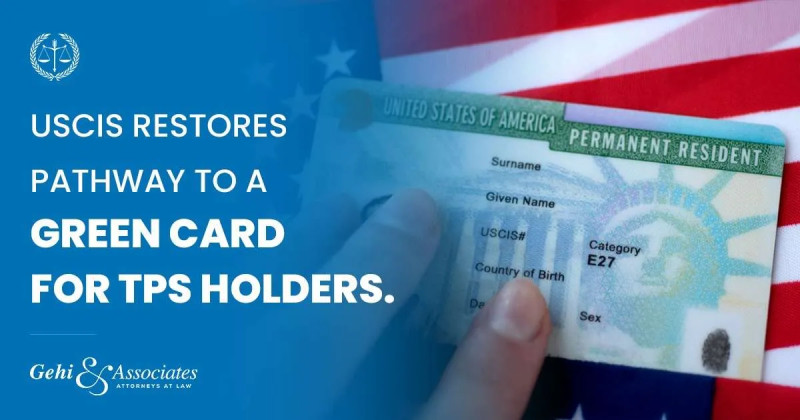
In the sprawling corridors of the U.S. immigration office, the air is thick with anticipation and anxiety. Maria, a 35-year-old from Honduras, clutches the edges of her Temporary Protected Status (TPS) card, wondering if today will be the day she finds a path to a more permanent future. For Maria, and thousands of others like her, understanding the journey from TPS to a green card is a critical and often complex process.
Understanding the Basics of TPS and Green Card Pathways
The U.S. government established the TPS program to provide legal status and stability to foreign nationals during crises or upheaval in their home countries. This status is typically granted when conditions in a country make it unsafe for its nationals to return. However, TPS does not automatically lead to a green card, as it is a temporary solution .
So, what is the pathway from TPS to green card status? The good news is that while TPS does not provide a direct route to permanent residency, many TPS holders are eligible for a green card through other immigration avenues. These include family petitions, employer sponsorship, asylum, and even new legislative proposals that aim to streamline the process .
Exploring TPS to Green Card: Legal and Political Landscape
In recent years, legislators have proposed several bills that could fundamentally change the landscape for TPS holders seeking a pathway to a green card. For example, the Respect for Essential Workers Act proposes that TPS holders who work in essential sectors like healthcare, construction, and food supply would be eligible to apply for green cards after a qualifying period . This legislation, if passed, would create a legislative mechanism that currently does not exist, providing TPS holders with a more defined pathway to permanent residency .
The political atmosphere in Washington is fraught with debates over the fate of TPS holders. Democrats have been vocal in their support for providing a path to green cards for these individuals, emphasizing their contributions to the U.S. economy and society. Representative Sheila Cherfilus-McCormick of Florida introduced a new bill, the Respect for Essential Workers Act, which aims to turn TPS status into permanent residency. However, the administration's stance remains uncertain, leaving TPS holders in a state of limbo .
TPS Green Card Process: Steps and Considerations
For those looking to navigate the complex TPS to green card process, there are several steps to consider. First, it is essential to understand that TPS status is considered a lawful nonimmigrant status, which allows TPS holders to apply for their green card within the United States. However, the eligibility for obtaining a green card for TPS holders depends on various factors such as their individual circumstances, immigration history, and whether they meet the requirements set by the U.S. Citizenship and Immigration Services .
One of the key pathways from TPS to green card is through family-based petitions. If a TPS holder has a family member who is a U.S. citizen or lawful permanent resident, they may be eligible to sponsor their application for a green card. Additionally, employer sponsorship is another avenue, where TPS holders with specialized skills or employment offers can apply for an employment-based green card, also known as an EB green card .
Another route is marriage-based immigration, where TPS holders who are married to U.S. citizens or lawful permanent residents can apply for a green card through their spouse. This process involves submitting a petition and undergoing a series of interviews and background checks .
Most TPS holders find themselves in a tough spot, legally and emotionally. Maria says, 'I've been in the U.S. for over a decade, and I've built a life here. But without a green card, I always feel like I'm on borrowed time.'
The journey from TPS to a green card is a challenging one, but with the right legal guidance and a bit of luck, it is possible. The ever-changing political landscape and the complexities of immigration law add to the uncertainty, but with perseverance and the support of advocates, TPS holders like Maria may find the stability they seek.
For anyone hoping to gain a better understanding of how to transition from TPS to a green card, consulting with an experienced immigration lawyer is crucial. They can provide guidance on the specific requirements, help navigate the complex application process, and offer support during legal proceedings. TPS holders are encouraged to stay informed about the latest legislative developments and consider all potential pathways to permanent residency.
As Maria treads the long, winding path towards a green card, the corridors feel a little less daunting, a little more hopeful. She takes a deep breath, focusing on the next steps, one foot in front of the other, as the door to a more secure future slowly opens.