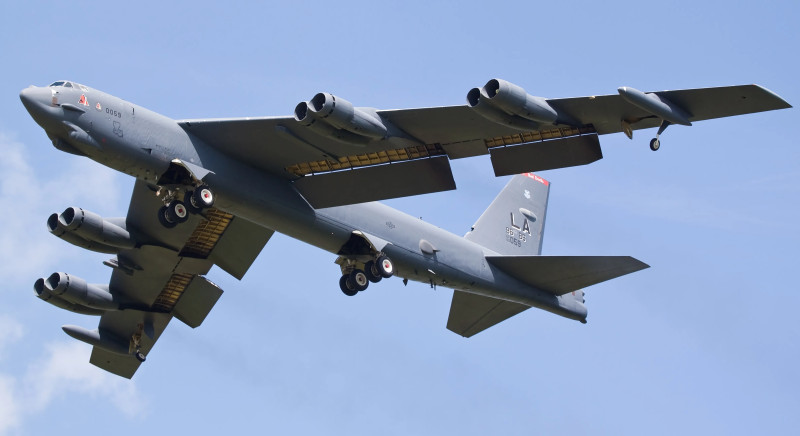
The fluorescent glare of the briefing room flickered as the images on the screen shifted, revealing a clear, unmistakable image of a B-52 bomber—its massive wingspan stretching across the frame. The hum of phones buzzing in pockets filled the room as the news was announced: US B-52 bombers, those formidable giants of the skies, have begun a new chapter in their storied history, this time with a mission over Iranian airspace. — The B-52 Stratofortress, an aircraft that has long been a symbol of American military dominance, continues to hold a pivotal role in global security, showcasing its enduring relevance and adaptability.
The B-52's Enduring Legacy and Current Role in Global Security
First introduced during the Cold War, the B-52 Stratofortress has earned its place as a cornerstone of U.S. military strategy. The aircraft's design and performance capabilities make it a versatile tool for both nuclear deterrence and conventional warfare, a testament to its enduring legacy. The B-52's ability to carry a high payload over vast distances with precision navigation has made it an indispensable asset in the ever-evolving landscape of global security.
The Strategic Significance of B-52 Missions Over Iran
In the latest geopolitical maneuvers, the B-52 has taken center stage once again. The bombers, with their nuclear capabilities, have been deployed from RAF Fairford in the United Kingdom, embarking on a mission that underscores their strategic importance in the Middle East. The estimated combat flight time of around seven hours places them within striking range of Iran, highlighting their reach and the strategic deterrence they provide.
The B-52H Stratofortress, capable of flying at high subsonic speeds and altitudes of up to 50,000 feet, can carry both nuclear and conventional precision-guided ordnance, adding to its versatility and effectiveness. This capability was recently showcased during Operation Epic Fury, where B-52s struck Iranian missile sites with precision. The B-52's ability to perform such missions underscores its strategic value, as it remains a frontline aircraft for the United States Air Force despite being over seven decades old.
The B-52's Unmatched Capabilities and Future Prospects
The B-52's continued relevance can be attributed to its unmatched capabilities: a 70,000-pound payload, an 8,800-mile unrefueled range, and the ability to launch next-generation weapons like the AGM-181 LRSO. These features make the B-52 a force to be reckoned with, capable of delivering both immediate and long-term strategic impacts. The aircraft's versatility allows it to perform a variety of missions, from reconnaissance to precision strikes, making it a cornerstone of U.S. national security.
As the US Air Force continues to refine and upgrade the B-52, the bomber's future prospects remain bright. With ongoing missions in regions of strategic importance, such as the Middle East, the B-52 will likely continue to be a visible and pivotal element in military operations. Its role in achieving air superiority over Iran and its capability to perform overland missions are just two examples of its adaptability and effectiveness in modern warfare.
In the near future, the B-52's missions will likely continue to evolve, much like the aircraft itself. As the geopolitical landscape shifts, the B-52's ability to adapt and perform will be crucial in maintaining US air superiority and ensuring global security. For now, the B-52 remains a symbol of American military prowess, a testament to its enduring legacy.