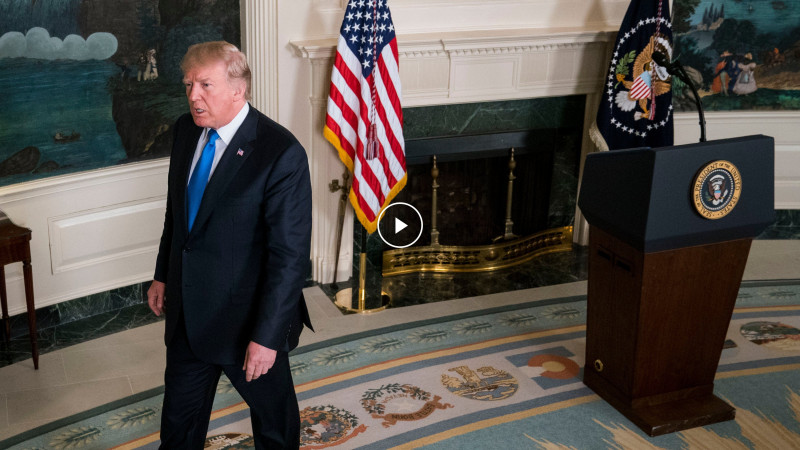
On Tuesday, President Donald Trump escalated tensions with Iran, declaring that a "whole civilization" could be wiped out, and sparking fears of a nuclear confrontation. As the world watches and waits, the question on everyone's mind is: will Trump go nuclear? The rhetoric, while alarming, is part of a long-standing strategy, and it remains to be seen if there is any substance behind the threats.
Analyzing Trump's Statements and Their Implications
When Trump issued his apocalyptic statement, it was met with a flurry of online speculation and concern. Specifically, Trump threatened that “a whole civilization will die tonight” if Iran did not agree to a deal. However, the White House has been quick to dismiss such an interpretation. The idea that the U.S. would consider the use of nuclear weapons against Iran, especially given the targets involved, seems far-fetched. Most civilian infrastructure can be effectively destroyed with conventional weapons, making the escalation to nuclear weapons both unnecessary and strategically unsound.
Nonetheless, Trump has not shied away from the use of strong language. He has previously threatened to bomb Iran "back to the stone ages" if they do not agree to a deal. This escalation is part of a broader strategy to apply maximum pressure on Iran, but the actual likelihood of a nuclear strike is debatable. The U.S. has not ruled out the use of tactical nukes against Iran’s nuclear sites, but this also raises questions about the effectiveness and necessity of such a move.
The White House's Official Stance and Expert Opinions
To clarify the situation, representatives from the White House have been asked if Trump’s apocalyptic statements include a serious threat of nuclear war. The White House denied that such a threat was implied, but the ambiguity in Trump’s statements has only fueled the speculation. It's worth noting that the U.S. military has protocols in place to prevent the unauthorized use of nuclear weapons, meaning that even if such an order were given, it would not automatically be carried out.
Experts weigh in on the feasibility of such a move. The strategic implications are immense and would likely have significant repercussions for global security. For example, the continuing war in the region might actually strengthen Iran’s regime, making the use of nuclear weapons even more counterproductive. The escalation would also have severe economic and geopolitical consequences, potentially drawing the U.S. deeper into a protracted conflict.
The International Reaction and What Comes Next
As tensions escalate, the international community watches with bated breath. Trump has called for Iran to accept a deal and reopen the Strait of Hormuz, a crucial oil transit waterway. The U.S. has set a deadline for Iran to comply, or face "hell," but the specifics of this threat remain unclear. It is also noteable that Iran maintains its nuclear capabilities despite U.S. claims of success, adding another layer of complexity to the situation.
What is undeniable is the escalation of tensions and the real potential for a catastrophic conflict. While the White House denies the possibility of nuclear war, the rhetoric is unmistakably aggressive. The stakes are high as the world holds its breath, and the international community demands a resolution that avoids a nuclear disaster.
"The idea that the U.S. would use nuclear weapons against Iran is as frightening as it is unlikely." - Tom Nichols
The path forward is murky, but one thing is clear: the world is watching, and Trump's nuclear rhetoric could have real and lasting consequences. Will the U.S. go nuclear? The data is damning, but as of now, nobody knows.