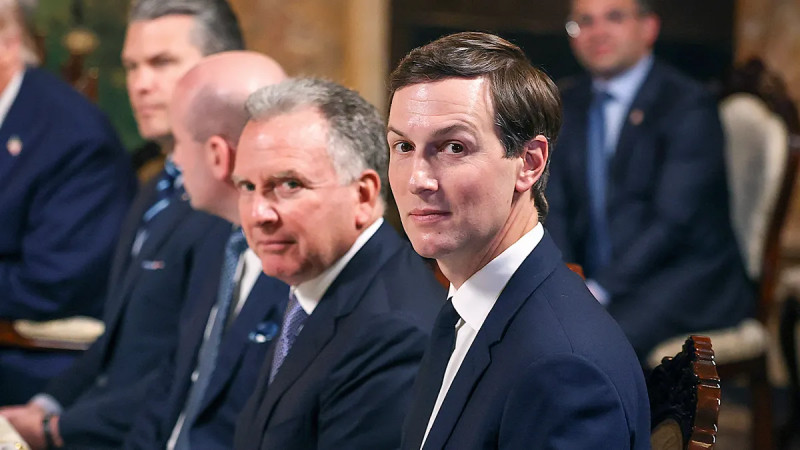
In the labyrinth of US-Iran diplomacy, one name has been quietly making headlines: Steve Witkoff. Witkoff and Jared Kushner's upcoming trip to Pakistan underscores the complex and critical nature of the ongoing peace talks with Iran. Amidst escalating tensions and delicate geopolitical maneuvering, Witkoff is emerging as a pivotal player in the delicate dance of diplomacy.
The Unlikely Envoy: Steve Witkoff's Rise to Prominence
Witkoff, a former diplomat and special envoy for Middle East peace missions, has quickly become a central figure in the administration’s efforts to broker a peace deal with Iran. His partnership with Jared Kushner has been particularly noteworthy, with the two heading to Pakistan for crucial talks aimed at resolving the ongoing Hormuz crisis. Witkoff's role has been shaped by his extensive experience in regional politics, making him a valuable asset in these high-stakes negotiations.
The Pakistan Pivot: A New Front in US-Iran Talks
Pakistan has become an unexpected focal point for these peace talks. On Saturday, Witkoff and Kushner embarked on their journey to Islamabad, where they are set to engage in direct talks with Iranian officials. This move comes as tensions in the Hormuz Straits continue to escalate, with the potential for a full-blown conflict looming. The decision to hold talks in Pakistan is strategic, given the country's unique position and historical ties to both the U.S. and Iran. The choice of venue itself signals a nuanced approach, aiming to foster an environment conducive to dialogue.
The significance of these talks cannot be overstated. The Hormuz crisis, which threatens to disrupt global oil supply and destabilize the region, demands a delicate balance of diplomacy and strategic foresight. Witkoff's involvement, alongside Kushner, highlights the administration's commitment to a peaceful resolution. Yet, the path to peace is fraught with challenges, including internal political pressures and external geopolitical dynamics.
One counterargument to the optimism surrounding these talks is the skepticism about the feasibility of a lasting peace agreement. Critics point to the longstanding mistrust and deep-seated conflicts between the U.S. and Iran, suggesting that any peace deal may be more about political posturing than genuine resolution.
The Road Ahead: Challenges and Opportunities
Despite the hurdles, the potential for progress is tangible. The current diplomatic efforts, spearheaded by figures like Witkoff, represent a glimmer of hope in an otherwise tumultuous landscape. The upcoming talks in Pakistan are a testament to the administration's resolve and the diplomatic acumen of its envoys.
For Witkoff, this moment is not just a career milestone but a pivotal chapter in his quest to shape a more stable Middle East. His journey, from a relative newcomer to a seasoned diplomat, underscores the importance of experience and strategic thinking in navigating complex geopolitical landscapes. Here's what nobody's asking: what if Witkoff's diplomatic finesse could be a game-changer, not just in the Hormuz crisis, but in broader Middle Eastern conflicts? The data may point to a need for such innovative diplomacy.
The world watches as Witkoff and Kushner prepare to engage in what could be a pivotal moment in US-Iran diplomacy. Let's see how this plays out in the coming days, as Pakistan becomes the new front in the quest for peace in the Middle East.
Witkoff continues to be the quiet force behind the scenes, navigating the intricate web of international diplomacy with a steadfast commitment to his mission. The success of these talks will not only impact the immediate crisis but also set a precedent for future diplomatic efforts in the region.