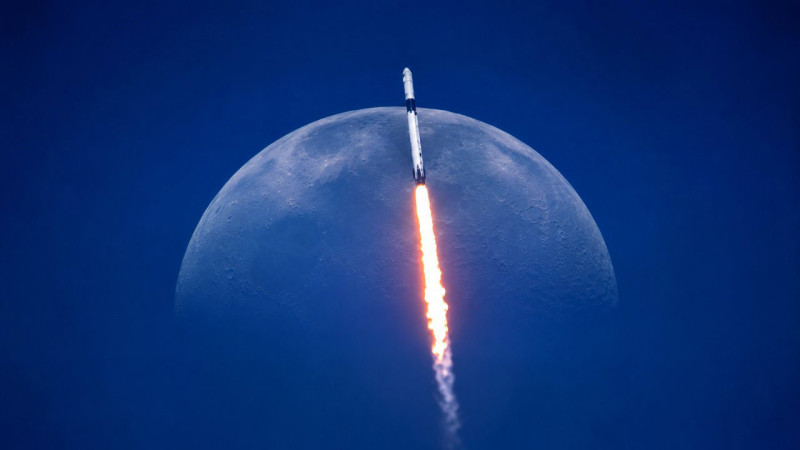
A New Dawn Breaks Over Space Coast as Falcon Heavy Rises

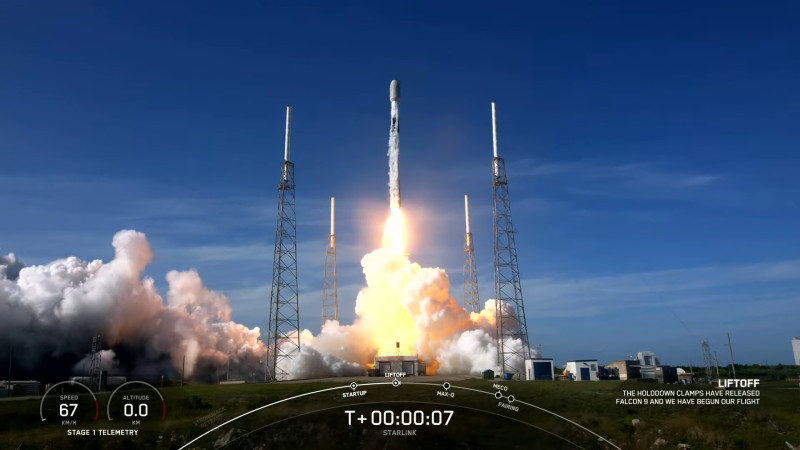
A thunderclap that shakes the earth. That’s the sensation Florida’s Space Coast will experience at 10:21 a.m. ET on Monday, April 27, 2026, when the Falcon Heavy rocket, the most powerful in SpaceX’s fleet, lifts off from Launch Complex 39A at Kennedy Space Center. This launch, occurring after an 18-month hiatus, marks a pivotal moment in the history of space exploration.
The Power of the Falcon Heavy Rocket
Imagine three Falcon 9 cores strapped together, each generating a collective thrust of 5 million pounds. This is not just a rocket; it’s a symphony of engineering prowess, a testament to human ingenuity, and the Falcon Heavy rocket embodies this. The vehicle, a marvel of reusability and performance, has been setting records and breaking barriers since its debut in 2018. This mission will be the 12th flight for the Falcon Heavy, a milestone that speaks to its reliability and versatility.
With a launch window spanning 85 minutes, the Falcon Heavy will carry the ViaSat-3 F3 satellite to a geosynchronous transfer orbit. The ViaSat-3 F3, designed to provide enhanced internet coverage to the Americas, will join its predecessors, ViaSat-3 F1 and ViaSat-3 F2, which were launched in May 2023 and another date respectively. The launch will offer a striking visual spectacle and a chance for residents in central Florida to witness the raw power of spaceflight as the rocket's sonic booms rumble across the landscape.
For those eager to witness this spectacular event, SpaceX will provide a live webcast, allowing viewers around the world to experience the launch in real-time. The webcast will offer detailed commentary and insights into the mission, making it accessible even to those new to space exploration.
The Impact of the Falcon Heavy VIASAT-3 Launch
This upcoming mission will not only amplify SpaceX’s legacy but also set the stage for future endeavors. The Falcon Heavy’s ability to carry heavy payloads into space makes it an indispensable asset for missions that require significant power and reach. The Falcon Heavy’s upcoming launch of the ViaSat-3 F3 satellite will underscore its importance in delivering advanced internet connectivity to remote areas.
The Falcon Heavy will also play a crucial role in upcoming missions, including potential crewed flights to the Moon and beyond. Its success on April 27 will be a stepping stone for more ambitious projects, pushing the boundaries of what is possible in space exploration.
When the Falcon Heavy roars to life on Monday, it will be more than just a rocket launch; it will be a testament to human ambition and a harbinger of future advancements in space technology.
Reflections on the Future of Space Exploration
The Falcon Heavy’s launch on April 27, 2026, is more than just a rocket launch — it's a reminder of the relentless march of human progress. Just as the Saturn V rocket once captivated the world with its power and potential, the Falcon Heavy now stands as a beacon of innovation and possibility.
“The Falcon Heavy launch is a significant milestone, showcasing our ability to push the limits of space exploration and technology. It underscores the importance of continuous innovation and collaboration in achieving our ambitious goals.”
How does this story make you feel?
 Up next · Techebay outage: The Outage That's Left Millions In The Lurch, And It's Only Getting Worse