El Niño 2026: Climate Chaos Looms as Super El Niño Emerges
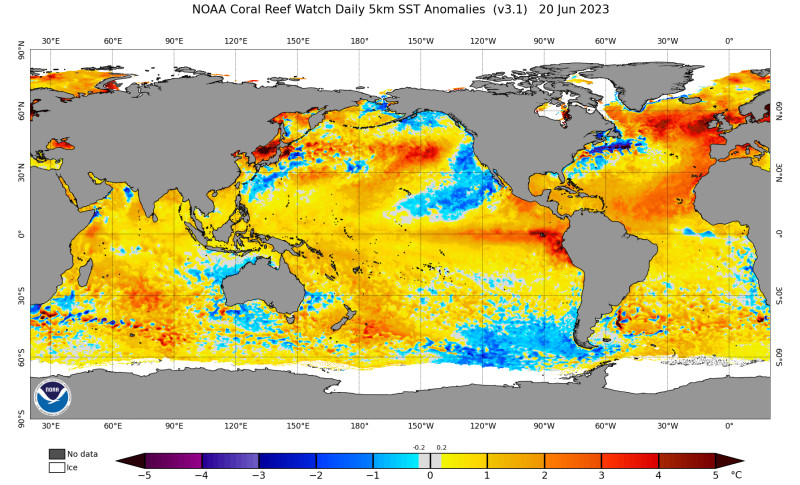
Dr. Amelia Hart, a renowned climate scientist, stands before a wall of charts and graphs at the Geophysical Fluid Dynamics Laboratory. Her eyes are fixed on the vibrant purple lines that stretch across a series of intricate diagrams. These lines, which represent the latest predictions of the intense El Niño brewing in the Pacific, are a cause for concern. "If these projections hold true, we are in for a super El Niño like no other," she declares, her tone a mix of scientific detachment and palpable urgency. The El Niño of 2026 is no ordinary weather phenomenon; it is shaping up to be a climatic specter that could reshape global weather patterns and alter the course of the year.
The Anatomy of a Super El Niño: Unraveling the Science
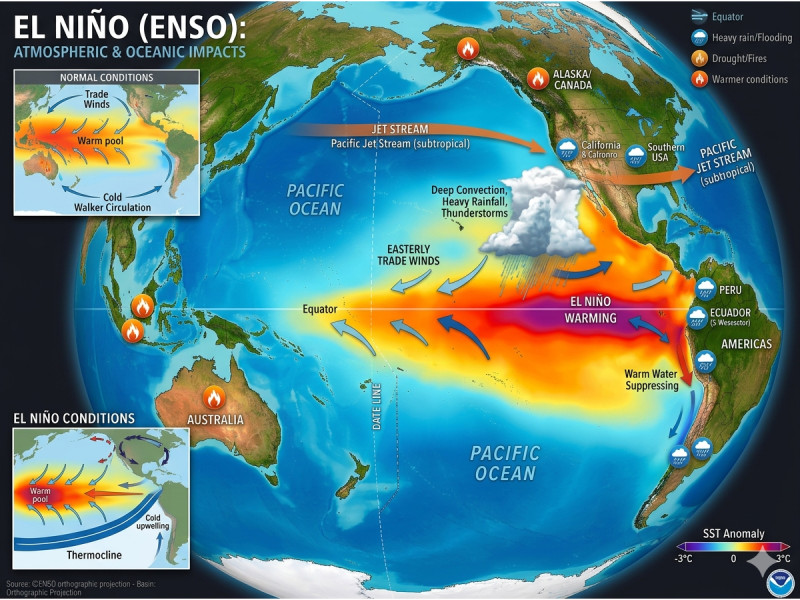
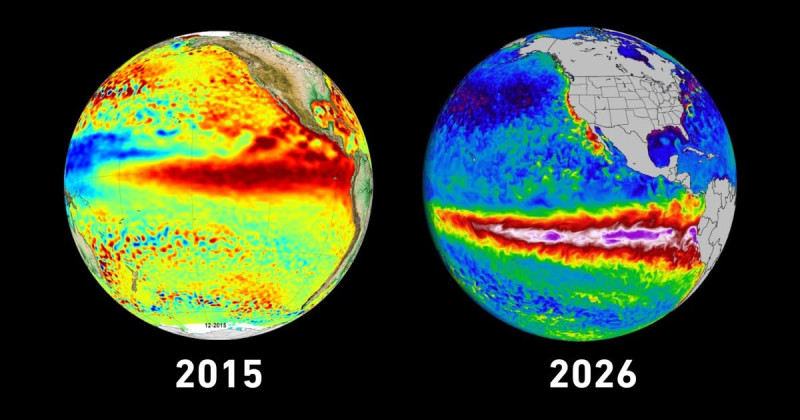
At the heart of this climatic drama is the El Niño-Southern Oscillation (ENSO), a complex interplay of oceanic and atmospheric conditions that oscillate between warm and cool phases. When average sea surface temperatures in the central and eastern equatorial Pacific rise at least 2°C, it signifies the onset of a super El Niño. This year, the temperature anomaly is projected to peak at an alarming 2.5°C, an indication of a particularly ferocious climatic event. The super El Niño of 2026 is not just a weather anomaly; it is a harbinger of extreme weather events, global heat records, and profound climatic shifts.
Predicting the precise trajectory of a super El Niño is a complex task, but the latest data offers a glimpse into what the world might expect. According to the International Research Institute for Climate and Society (IRI), the ENSO-neutral conditions that have prevailed through April-June 2026 are expected to give way to a full-blown El Niño by May-July. This transition is likely to usher in a period of heightened climatic instability, with the potential to reshape weather patterns across the globe.
El Niño 2026: Global Impacts and Preparation
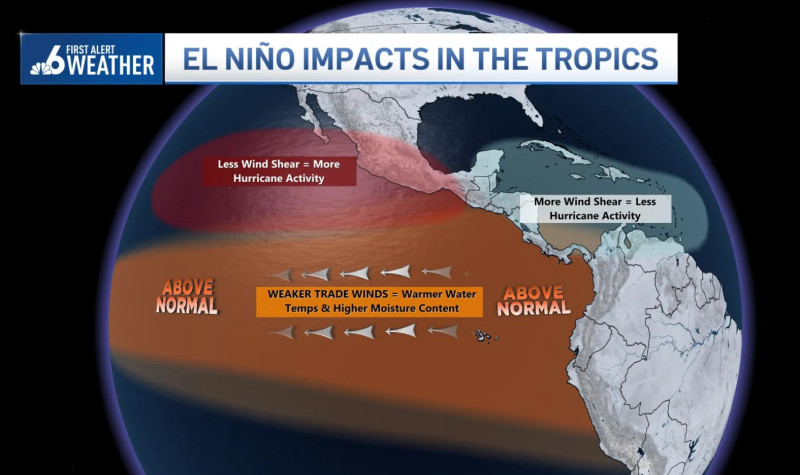
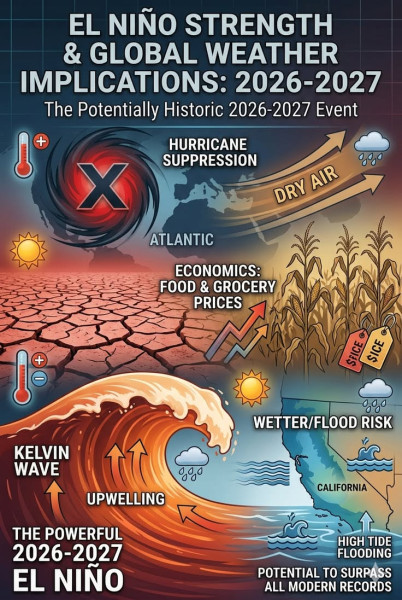
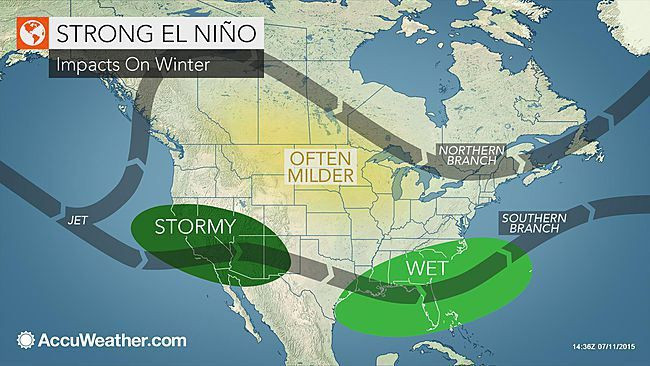
For the United States, the ripples of the El Niño 2026 are expected to manifest in significant ways. From the Pacific Northwest to the Atlantic coast, the weather patterns are poised to undergo dramatic shifts. Rainfall patterns are likely to be disrupted, with some regions experiencing droughts while others brace for torrential downpours. The hurricane season, too, is expected to be particularly active, with the warm ocean waters fueling storms of unprecedented intensity.
Dr. Timothy Reilly, a meteorologist with the National Oceanic and Atmospheric Administration (NOAA), explains the potential impacts on the U.S. with a sense of cautious optimism. "While we can't predict the exact outcomes, the El Niño will undoubtedly bring about significant changes. Preparedness and adaptive measures will be crucial in mitigating the worst effects." Preparing for the El Niño 2026 involves more than just scientific analysis; it requires a concerted effort from governments, communities, and individuals to safeguard against the potential disasters looming on the horizon.
"We are likely to see extreme weather events, floods, droughts, and storms that could devastate communities and ecosystems," Dr. Hart warns. Climate change has made these events more frequent and severe, and the super El Niño of 2026 could be the ultimate stress test for our resilience and preparedness.
Historical Precedents: Lessons from Past El Niños
History offers a sobering lesson in the power of El Niño events. The super El Niño of 1997-98, for instance, was one of the strongest on record, causing widespread devastation and claiming thousands of lives. The El Niño events of 2014-16 and 2023-24 also brought record heat and fuelled further global temperature increases, setting the stage for the climatic turmoil of 2026. These past events underscore the need for vigilance and proactive measures as the world braces for another super El Niño.
"What we are seeing now is a repeat of past patterns, but with an added layer of complexity due to climate change. The super El Niño of 2026 could be one of the strongest in a century, and its impact will be felt globally," remarks Dr. Hart. This event is not just a fleeting anomaly; it is a harbinger of the challenges that lie ahead in our battle against climate change. The El Niño of 2026 is a stark reminder that we are living in a world where natural disasters and climatic upheavals are becoming the new normal.
As the world watches and waits, the super El Niño of 2026 looms like a specter on the horizon. The question is not whether it will come, but how we will respond. The door to the future, fraught with uncertainty and peril, is ajar. What lies beyond is a world in flux, a planet grappling with the forces of nature and the consequences of human action.
How does this story make you feel?
 Up next · ScienceBrawley, California Rocked by Series of Earthquakes Today