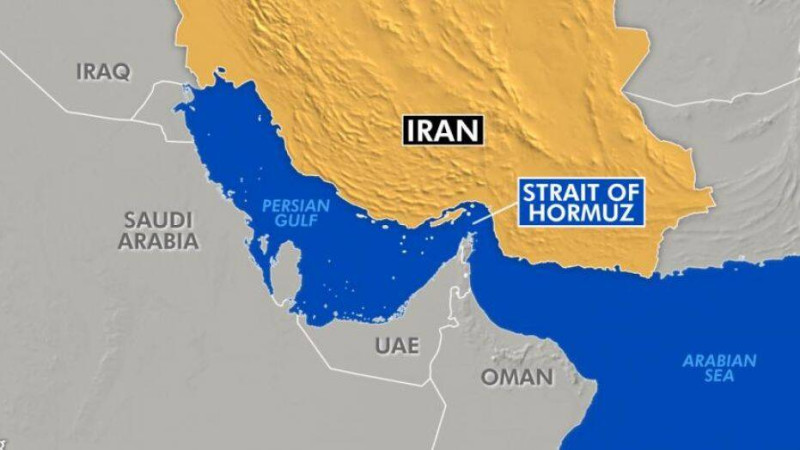
The Strait of Hormuz, a narrow waterway linking the Persian Gulf to the Gulf of Oman, has once again become a crucible for geopolitical tensions, as recent events have shown. The Strait of Hormuz remains a critical artery for global oil trade, with roughly 20% of the world's petroleum passing through it daily. However, this vital marine corridor has been at the center of a complex diplomatic dance involving the United States and Saudi Arabia, with Saudi Arabia's decision to deny U.S. military access to key bases and airspace, and President Trump's abrupt U-turn on a plan to reopen the waterway .
The Saudi U.S. Dispute and Its Impact on Strait of Hormuz Security
The recent Strait of Hormuz crisis unfolded with Trump's "Project Freedom," an ambitious initiative aimed at securing the waterway amid escalating tensions with Iran. The project was poised to reopen the Strait, ensuring the safe passage of commercial vessels through one of the world's most sensitive maritime corridors . However, Saudi Arabia’s unexpected refusal to grant the United States access to critical military assets, including Prince Sultan Airbase and Saudi airspace, abruptly halted the operation. This denial has effectively grounded U.S. military aircraft and vessels, raising questions about the future of regional security collaborations .
Saudi Arabia's decision, according to an NBC News report, came as a result of intense diplomatic pressure. The Saudis clearly indicated that they would not allow U.S. military aircraft to use Prince Sultan Airbase or enter Saudi airspace without certain assurances regarding the scope and objectives of the operation. This move underscores the delicate balance of power and the intricate web of mutual dependence that characterizes the U.S.-Saudi alliance .
This diplomatic snag highlights the delicate balance of power and the intricate web of mutual dependence that characterizes the U.S.-Saudi alliance. The potential resurgence of "Project Freedom” hinges on the reopening of Saudi airspace and military bases to U.S. operations. The intricate diplomacy involved in reopening the Strait of Hormuz will determine the future of maritime security in the region .
Regional Dynamics and the Future of the Strait of Hormuz
The geopolitical reverberations of the Strait of Hormuz crisis extend far beyond the immediate military implications. Pakistan, Egypt, and Turkey recently convened a meeting to discuss the reopening of the Strait, reflecting a broader regional effort to stabilize the Middle East energy corridor . This diplomatic initiative underscores the interconnected nature of Middle Eastern geopolitics, where the actions of one nation can ripple through the region, affecting everything from oil prices to maritime security.
The geopolitical reverberations of the Strait of Hormuz crisis extend far beyond the immediate military implications. The broader regional dynamics are also at play, as seen in the recent meeting hosted by Pakistan with Egypt, Saudi Arabia, and Turkey to discuss the reopening of the Strait. This diplomatic initiative underscores the interconnected nature of Middle Eastern geopolitics, where the actions of one nation can ripple through the region, affecting everything from oil prices to maritime security .
Saudi Arabia, a key player in regional politics, has a vested interest in maintaining stability in the Strait. The Kingdom has long been a vocal advocate for safe navigation through the waterway, condemning any disruption that could threaten global energy supplies. Their recent stance against the U.S. operation highlights the complex interplay of national interests and regional security concerns .
Saudi Arabia’s influence in the region is undeniable, and their recent moves underscore their desire to maintain control over the Strait of Hormuz. The Kingdom has long been a vocal advocate for safe navigation through the waterway, condemning any disruption that could threaten global energy supplies. Their recent stance against the U.S. operation highlights the complex interplay of national interests and regional security concerns .
“The Strait of Hormuz has always been a strategic flashpoint, and recent events have only amplified its significance. As the world watches, the delicate balance of power in the Middle East continues to shift, with far-reaching implications for global energy security and geopolitical stability. The future of the Strait of Hormuz remains uncertain, but one thing is clear: the actions of key players like Saudi Arabia and the United States will shape the narrative for years to come.”
As the world watches the Strait of Hormuz unfold, the delicate balance of power in the Middle East continues to shift, with far-reaching implications for global energy security and geopolitical stability. The future of the Strait of Hormuz remains uncertain, but one thing is clear: the actions of key players like Saudi Arabia and the United States will shape the narrative for years to come.