Russia's Putin Visit to Kuril Islands Provokes Japan
A visit to the disputed Kuril Islands by Russian President Vladimir Putin has reignited a territorial dispute with Japan. The trip drew strong condemnation from Tokyo, which claims the islands, sparking diplomatic tensions between the two nations.
Russia's Assertion of Control in Disputed Territory
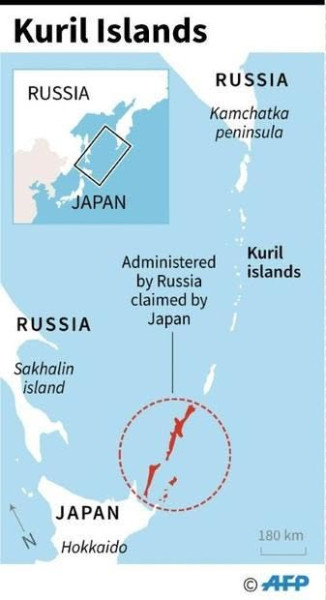
The Kuril Islands, a chain of volcanic islands stretching from Japan's northernmost tip to Russia's Kamchatka Peninsula, are a contentious issue between Moscow and Tokyo. The dispute centers on the four southernmost islands, known as the Northern Territories by Japan and the Southern Kurils by Russia. These islands were captured by Soviet forces during World War II, and Japan has long sought their return.
Putin's visit, marked by a tour of military bases and strategic sites, sends a clear message about Russia's intent to maintain control over the disputed territory. Tokyo responded by issuing a strong protest, condemning the trip as an "absolutely unacceptable" move. Putin's presence in the region underscores Russia's growing military presence.
The islands hold strategic importance due to their proximity to key trade routes and Russia's military installations. Putin's visit comes amidst heightened regional tensions, with China and North Korea's activities in the Pacific Ocean adding to the geopolitical complexities.
Russia has steadily bolstered its military capabilities on the Kuril Islands, including the construction of new military bases and the deployment of advanced weaponry. This military buildup has heightened concerns in Japan, which views the islands as a critical part of its territorial integrity.
Japan's Strong Condemnation and Diplomatic Actions
Japanese authorities have reacted with significant anger and have issued diplomatic protests. The Japanese government, which considers the islands an integral part of its territory, has repeatedly called for their return.
Putin's visit to Iturup, one of the disputed islands, took place on a day where Tokyo was in a state of diplomatic tension. Iturup, known as Etorofu in Japanese, lies about 100 kilometers off the coast of Hokkaido. This visit was seen as a provocative move, coming amid strained relations and a lack of progress in negotiations over the disputed territories.
The Japanese public has expressed its frustration and concern over the lack of progress in resolving the dispute. The government has maintained a firm stance, insisting that the islands are Japanese territory and should be returned. This stance has been reinforced by recent diplomatic efforts and public statements from officials.
Japan's response has been swift. Tokyo issued a formal protest to Moscow, calling for immediate cessation of any activities that could further escalate tensions. A Japanese spokesperson noted that the visit was a blatant violation of Japan's territorial integrity and sovereignty, further complicating ongoing negotiations.
Geopolitical Implications and Future Considerations
Putin's visit to the Kuril Islands is seen not just as a domestic policy move but also as a geopolitical signal to the region. Russia's actions reflect its broader strategy in the Pacific, where it seeks to assert its influence amid growing Chinese and North Korean activities.
Tokyo, meanwhile, is grappling with the delicate balance of maintaining its sovereignty while navigating the complex geopolitical landscape. The visit has sparked calls for greater defense readiness and stronger diplomatic measures to address the dispute effectively.
The Kuril Islands dispute remains a significant challenge in Japan-Russia relations. Despite recent diplomatic efforts, the underlying territorial claims continue to be a contentious issue.
Tokyo has called for a return to negotiations, urging Moscow to engage in meaningful dialogue to resolve the dispute. As Russia continues to strengthen its military presence, the Kuril Islands dispute will remain a focal point in the region, affecting broader geopolitical dynamics.
Tokyo is also keeping a close eye on any further military developments in the region, wary of any potential escalation.
The next move to watch will be whether Japan and Russia can find a diplomatic path forward, or if Putin's visit signals a new phase in the long-standing dispute over the Kuril Islands.
How does this story make you feel?
 Up next · WorldHopkins Daycare: Tragic Incident Leaves Community in Mourn