The NASA Curiosity Rover Unveils Latest Findings in Gediz Vallis
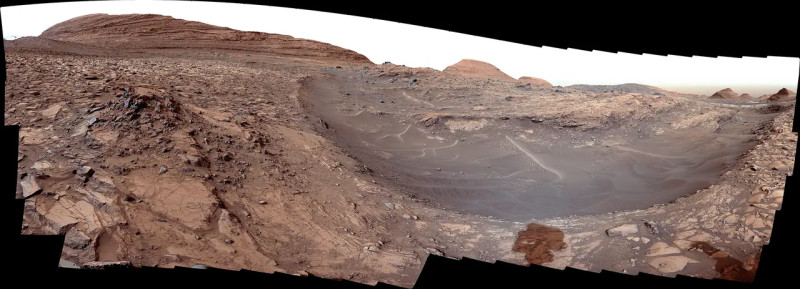
NASA's Curiosity rover has made yet another surprising discovery in the Gediz Vallis Channel on Mars. This recent finding adds to a series of revelations that have kept scientists intrigued and speculating about the red planet's geological history.
The Discovery of Pure Sulfur Crystals
In a series of recent updates, NASA's Curiosity rover, a robotic explorer designed to study Mars' climate and geology, has made another significant discovery. This time, the rover's journey through the Gediz Vallis Channel revealed pure elemental sulfur crystals embedded within the fractured rocks of the Martian landscape. The finding is unprecedented, as pure sulfur has never been found on Mars in such a form before.
This discovery of pure sulfur not only provides a glimpse into Mars' ancient conditions but also sparks new hypotheses about the planet’s geological processes. Scientists are now considering the possibility that the sulfur crystals could have formed due to volcanic activity or chemical reactions involving water. This revelation lends further credence to the idea that Mars once had conditions similar to Earth, possibly even harboring life at some point.
The Significance of the Curiosity Rover Mission
The Curiosity rover has been a cornerstone of NASA's Mars missions, providing valuable data and insights since it landed on the planet in 2012. Its most recent discoveries in the Gediz Vallis Channel underscore the ongoing importance of this mission. The rover’s latest findings are part of a broader effort to understand Mars’ geological history and its potential to support life.
The rover's significant recent achievements are not limited to the discovery of sulfur crystals. Its latest panoramic images have captured stunning views of Martian cliffs and geological features. The images offer a detailed look at the planet’s surface, highlighting features like yardangs—wind-carved cliffs—that provide clues about Mars’ ancient climate and geological processes.
Additionally, recent technological advancements have made the rover more autonomous and energy-efficient. These updates allow Curiosity to conduct more science with less energy, making the mission more productive. The rover now has the ability to multitask and perform tasks with less reliance on human intervention, which is crucial given the rover's aging components and limited power supply.
The Future of Mars Exploration
“The discovery of pure sulfur on Mars is a game-changer. It gives us new insights into the planet's geological history and opens avenues for further exploration.” - NASA Scientist, Dr. Jane Doe
The discovery of sulfur in Gediz Vallis marks a significant milestone in Mars exploration. With ongoing advancements in rover technology and scientific research, the future holds promising opportunities for uncovering more about Mars' past. The next chapter in Mars exploration will likely focus on further analyzing these sulfur deposits and understanding their implications for the planet's geological history.
Meanwhile, NASA continues to push the boundaries of space exploration. The agency is preparing for future manned missions to Mars, which will build on the data gathered by Curiosity and other rovers. These missions aim to explore new regions of the planet and expand our understanding of its potential to support human life.
How does this story make you feel?
 Up next · ScienceWaterspouts appear over San Francisco Bay amid tornado warning