Optimizely Malware Attack: 178 Major Websites Compromised in Supply-Chain Cyberattack
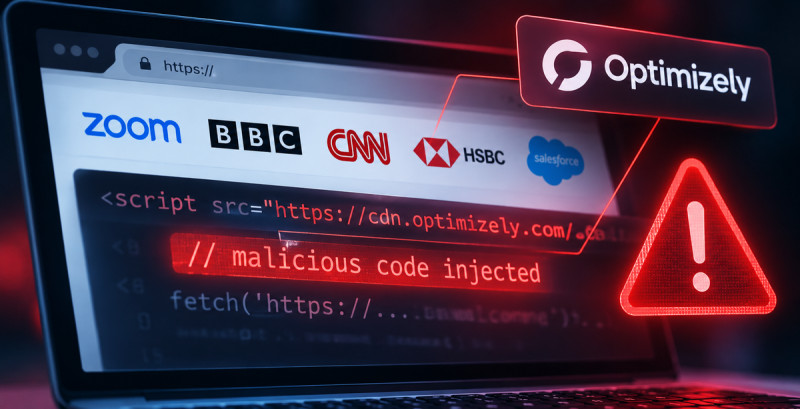
Malware Attack Hits 178 Websites via Optimization Platform
178 major websites, including Zoom, the BBC, and CNN, were recently hit by a widespread malware attack that exploited the widely-used Optimizely Web experimentation platform. This supply-chain attack, named Optimjack, injected malicious JavaScript into the sites, putting visitors at risk of cryptocurrency theft and payment card data breaches. The attack, which has potentially exposed visitors to exploiting codes, has raised significant concerns about the vulnerabilities in cloud-based services and third-party scripts.
Optimizely Malware Campaign: What It Stole and What to Check
The malware attack manipulated the JavaScript code in the Project JavaScript field inside Optimizely accounts, allowing attackers to insert a malicious script loader. This malicious code was hosted from a trusted domain (cdn.optimizely.com) and evaded trust checks. The attack primarily targeted cryptocurrency users and online shoppers, swapping cryptocurrency wallet addresses and skimming payment card information. Security experts have emphasized the importance of regularly updating security protocols and monitoring third-party scripts to mitigate such risks.
Next Steps: Optimizely Malware Attack Response and Preventive Measures
The attackers gained write access to Optimizely customer accounts and inserted malicious scripts that replaced copied wallet addresses and stole cryptocurrency and payment card information. The attack, named Optimjack, has reportedly compromised at least 186 websites, including major brands. Scott Helme, a security researcher, disclosed the attack, warning that it is still ongoing and potentially exposing visitors to malware. In response to the attack, affected organizations should immediately review their security protocols and consider disabling or removing Optimizely scripts until further notice.
Security experts have advised organizations to conduct thorough security audits and implement robust monitoring systems to detect and prevent similar attacks in the future. Users are urged to remain vigilant and avoid clicking on suspicious links or entering sensitive information on compromised sites. As the attack continues, the next thing to watch is how organizations will enforce stricter security measures to protect their users from such threats. The impact of this attack highlights the need for enhanced security protocols and continuous monitoring of third-party scripts to safeguard against future supply-chain attacks. How will the industry respond to improve security measures and protect users from similar threats?
How does this story make you feel?
 Up next · TechNvidia shares fall 4% as markets slide before earnings release