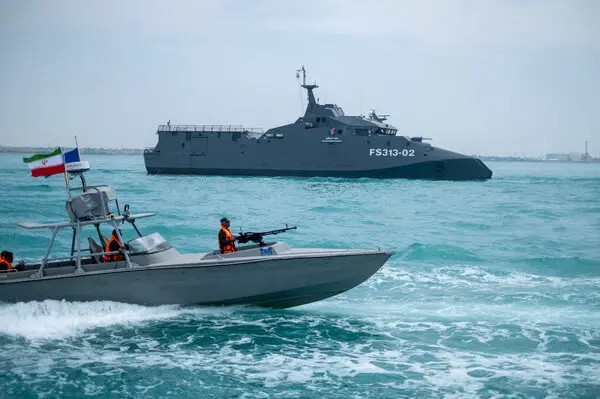
The Strait of Hormuz, a critical waterway for global oil trade, has become a focal point in the ongoing conflict between Iran and the United States. Merchant ships navigating the strait face unprecedented threats from Iran's aggressive actions, as the U.S. military intensifies its efforts to secure the passage. The latest escalations, marked by Iran's firing of missiles and drones, have heightened tensions and raised significant concerns for the international maritime community.
U.S. Military Intervention and Iranian Threats
The U.S. military has launched a mission to guide merchant ships through the Strait of Hormuz, a vital artery for global commerce, after several incidents involving Iranian aggression. On Monday, Iran targeted U.S.-flagged ships with cruise missiles, drones, and small boats. The U.S. response was swift, with the military "blew up" six small Iranian boats. While there were no reported casualties or ships hit, the threat persists, affecting the safe passage of vessels through the strait.
The latest escalation began after the U.S. warships and merchant vessels sailed through the Strait of Hormuz, despite Iran's repeated threats. The Iranian regime has long threatened to interfere with any attempts to navigate the strait, citing the need to protect what they view as their strategic interests.
The U.S. military's intervention aims to reopen the strait, which has been blocked by Iranian forces since the war began. The blockade has left hundreds of ships and their crews stranded, creating a human and economic crisis. The U.S. has also announced a blockade of Iranian merchant ships, further escalating the situation.
UAE Under Attack: Impact on Regional Stability
The United Arab Emirates (UAE) has also been affected by the conflict, with Iran launching attacks on several ships in the Strait of Hormuz and setting a UAE oil port ablaze. The UAE, a key player in regional politics, has expressed concern over the escalating tensions, which threaten to destabilize the entire Persian Gulf region. Iran has issued a statement advising ships to coordinate with Iranian officials, a move seen as a direct challenge to U.S. efforts to reopen the strait.
The UAE's strategic location and significant economic interests make it a prime target for Iranian aggression. The UAE has been a vocal supporter of the U.S. and its allies in the region, further complicating the situation. The attacks on the UAE's oil port, a critical infrastructure, highlight the broader implications of the conflict, affecting not just the maritime community but the global energy market as well.
"The situation in the Strait of Hormuz is incredibly volatile. It's a critical waterway, and any disruption can have severe global consequences." - Karen Chammas, AP Correspondent
The Future of Merchant Ships in the Strait of Hormuz
As the conflict continues, the future for merchant ships in the Strait of Hormuz remains uncertain. The U.S. military's efforts to secure the passage have been met with fierce resistance from Iran, raising questions about the sustainability of such interventions. The U.S. has vowed to continue its mission, despite the risks, to ensure the safe passage of ships through the strait.
Recent developments have shown that the U.S. is not backing down from the conflict, with Donald Trump's operation to open a route through the Strait of Hormuz for hundreds of trapped ships. This move, while strategically significant, has brought the region back to the brink of war, with both sides showing no signs of backing down.