Trump's Executive Order: The Signs of a Historical Divide
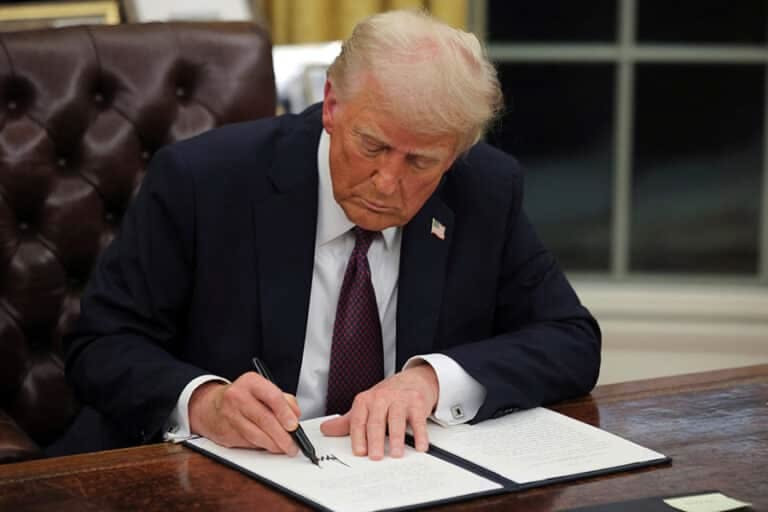
Imagine the museum of history as a giant, silent parliament, where the past is argued and debated. In 2026, the silence was broken, not by an echo of the past, but by a new political directive from President Donald Trump. The Smithsonian museum signage order was a bold move, a modern day battle cry in the ongoing culture wars. Trump's directive was straightforward, yet controversial: install warning signs outside the Smithsonian's National Museum of American History, cautioning visitors that the exhibits might be skewed by ideological bias or inaccuracies.
Political Landscape: The Spark for the Smithsonian Directive
The political landscape of 2026 was a volatile one, with debates over historical interpretations and cultural narratives at the forefront. Trump's order for signs at Smithsonian was not just a passing directive, but a strategic move in a larger political chess game. It was seen as a continuation of the administration's broader efforts to reshape the narrative of American history. By highlighting what he viewed as inaccuracies, Trump sought to challenge the prevailing historical narratives and to position his administration as the arbiter of truth.
Signs of Contention: The Execution of the Order
On a Friday in 2026, the National Park Service received orders to install temporary signage outside the Smithsonian's National Museum of American History. These signs were meant to serve as cautionary plaques, warning visitors of the "inaccurate information" presented within the museum's exhibits. The directive was not merely a suggestion, but a mandate, reflecting the administration's determination to firmly implant its views into the public discourse. The intention was clear: to provoke a re-examination of the museum's content and to foster a more skeptical public. This directive was seen as a bold intervention, sparking immediate debate and controversy among historians and the public.
President Trump’s directive to install signs at the Smithsonian's U.S. history museum was a move that sparked immediate debate and controversy. The signs, which were meant to warn visitors of the "inaccurate information" presented within the museum's exhibits, were seen as a direct challenge to the established historical narratives and the Smithsonian's role as a custodian of American history. This directive was a continuation of the administration's broader efforts to reshape the narrative of American history.
“The warning signs are a political move, nothing more. They don't correct the exhibits; they just create more controversy.”
The Cultural Fight: Interpretations and Reactions
The Smithsonian warning signs order was more than just a physical addition to the museum. It was a symbolic gesture that reverberated through the cultural landscape. Historians and museum professionals alike expressed concern over the implications of such a directive. They feared that it could undermine the credibility of the museum and erode public trust in historical institutions. The museum, after all, is a sacred space where the past is preserved and presented with a sense of objectivity. The order, however, introduced an element of subjectivity, a political lens through which history was now being viewed. This was a seismic shift, a departure from the traditional role of museums as neutral custodians of history.
The Smithsonian’s National Museum of American History was thrust into the national spotlight, albeit in a controversial manner. This directive was framed as a defense against what the administration deemed as historical inaccuracies and ideological biases. However, for many, it was seen as a political maneuver to control the narrative of American history, a narrative that has always been subject to multiple interpretations and perspectives. The museum, which has long been a beacon of historical truth and objective scholarship, was now seen as a battlefield in the ongoing culture wars.
The executive order was a bold move. But was it a necessary one? For some, it was a step towards transparency, a way to ensure that visitors were informed about the potential biases in the exhibits. For others, it was a political stunt, a way to undermine the credibility of a respected institution and to push a particular political agenda. The Smithsonian signage directive was a flashpoint, a moment in time that encapsulated the broader debates over history, truth, and politics.
The exact nature of the signs and their content remains a subject of speculation. Some reports suggest that the signs will highlight specific exhibits that the administration views as inaccurate, while others suggest that they will serve as a general warning about the museum's content. Regardless of the specifics, the order has sparked a national debate about the role of museums in society and the responsibility of historical institutions to present objective and accurate information. For now, the signs stand as a silent testament to a divisive political directive, a stark reminder of the ongoing battle over the narrative of American history.
As you walk through the halls of history, you have to wonder: what does this directive mean for the future of the Smithsonian museum signage?
How does this story make you feel?
 Up next · PoliticsTrump 2028: Will He Run or Just Troll?