Midway Airport Confronts Southwest Aircraft Tire Incidents
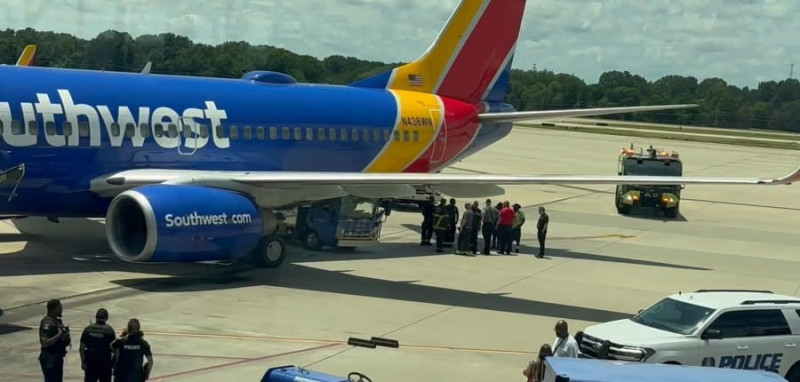
On a Monday morning in August 2026, Southwest Airlines Flight 1243 experienced a dramatic landing at Chicago's Midway International Airport, highlighting a critical tire issue that has become a focal point for aviation safety discussions.
An Incident of Unprecedented Complexity
Midway International Airport is a bustling aviation hub, but on this particular Monday, it faced an unexpected challenge. Southwest Airlines Flight 1243, arriving from Fort Myers, Florida, touched down with both nose gear tires having lost air pressure, resulting in a 46-minute delay. The aircraft, a Boeing 737-800, safely navigated the issue, thanks to swift actions by the ground crew, but the incident underscores the vulnerabilities in modern aviation, particularly in tire management during landings.
The incident began with an alarming event: smoke was reported near the landing gear, prompting an immediate emergency response from Chicago fire officials. The Chicago Fire Department swiftly reacted, but their intervention was largely precautionary as the plane had already been secured on the runway.
One of the most concerning aspects of the incident was the simultaneous failure of both nose gear tires, which required immediate attention. Airline mechanics replaced the tires on the tarmac before towing the plane to the gate, averting a potentially catastrophic situation.
Reviewing the Incident: A Key Insight
The sudden loss of air pressure in both nose gear tires is a rare occurrence, but one that could have endangering the safety of all 124 passengers on board. The effective response by Southwest Airlines’ ground crew ensured that the flight was grounded safely, allowing for the tire replacement to be completed on the runway.
Despite the tire issue, the plane managed to land safely, showcasing the robust safety protocols in place at Midway International Airport. The smooth handling of the situation prevented any injuries to the passengers, who were swiftly evacuated following the tire replacement.
“Midway International Airport's safety protocols are among the best in the industry,” said an aviation expert. “The timely response by the fire department and the ground crew was crucial in ensuring the safety of all passengers and crew members.”
Midway International Airport’s Response and Future Preparedness
The Chicago Fire Department’s swift response and the tire replacement by Southwest Airlines mechanics on the runway played a pivotal role in a successful resolution.
The tire failure prompted a thorough review of aircraft maintenance protocols, highlighting the need for stringent checks on tire conditions, especially before long-distance flights.
Midway International Airport, known for its efficient operations, is now likely to reinforce its safety measures, focusing on enhanced tire inspections and emergency protocols. This incident serves as a wake-up call, prompting the aviation industry to revisit and upgrade its safety protocols, particularly concerning tire maintenance and emergency response.
In the aftermath of this incident, the aviation industry is undergoing a reevaluation of tire maintenance practices, emphasizing the importance of robust safety measures. The incident at Midway underscores the critical need for continuous safety assessments and preparedness.
As the aviation industry looks to the future, the lessons from this incident will be pivotal in shaping new safety guidelines and emergency response protocols. Passengers can expect stricter safety measures and more proactive maintenance checks, ensuring that similar incidents are minimized. The next time passengers board a flight at Midway International Airport, they can rest assured that enhanced safety protocols are in place, inspired by the events of this Monday morning.
This incident parallels the 1989 crash of United Airlines Flight 232, where a catastrophic engine failure led to a dramatic emergency landing at Sioux City, Iowa. That event, though far more severe, showed how preparedness and quick thinking can turn potential tragedies into manageable crises.
How does this story make you feel?
 Up next · TechZach Franklin, the Architect Behind Banzoban's 2026 Success