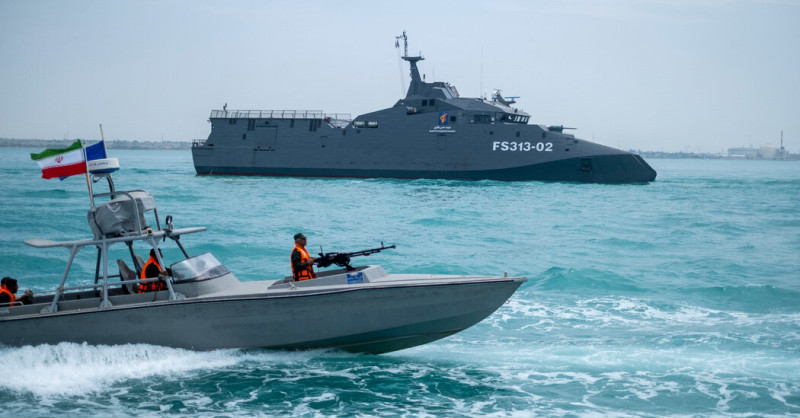
The Iran war's fragile ceasefire has been tested once again. On May 8, 2026, the United States struck two Iranian flagged oil tankers in the strategic Strait of Hormuz, a move that raised serious questions about the viability of the month-long ceasefire. The United States has been closely monitoring the Strait of Hormuz, turning away 58 commercial vessels attempting to exit or enter Iranian ports. The situation remains tense, with both sides accusing the other of breaching the fragile truce.
U.S. Central Command's Actions and Iran's Response
U.S. Central Command, which oversees military operations in the Middle East, has been pivotal in the recent escalation. The command claimed that the latest strikes were in response to Iranian aggression, stating that Iran had violated the ceasefire by firing on U.S. warships in the Strait of Hormuz. The U.S. military’s aggressive posture, coupled with President Donald Trump’s comments describing the strikes as merely a "love tap," has only added to the tension. This rhetoric, while intended to assert U.S. strength, may be seen as provocative by Tehran, potentially undermining efforts to achieve a lasting peace.
Iran has retaliated by accusing the U.S. of violating the ceasefire, a claim supported by the Iranian military command. The Iranian side maintains that the U.S. strikes on Iranian oil tankers were unprovoked and have further destabilized the region. The exchange of fire has raised concerns that the ceasefire, already fragile, could collapse entirely. Bahrain, which hosts a major U.S. naval base, has also come under attack from Iran, adding to the complexity of the situation.
The Strategic Importance of the Strait of Hormuz
The Strait of Hormuz is a critical chokepoint for global oil shipments, making it a focal point for geopolitical tensions. Control over this narrow waterway is essential for both nations, with Iran attempting to exert influence and the U.S. aiming to maintain free passage. The recent U.S. attempt to force open the strait for commercial shipping has added another layer of complexity. The U.S. strikes on Iranian-flagged ships, while intended to assert dominance, have further complicated efforts to de-escalate the conflict.
As the U.S. and Iran exchange fire in the Strait of Hormuz, the broader implications for regional stability are alarming. The U.S. has been unwavering in its stance, with President Trump threatening more violent retaliation if Iran does not agree to a peace deal. The situation highlights the delicate balance between military action and diplomacy, with both sides seemingly unprepared to back down.
Counter-Argument: Is Military Escalation the Only Option?
While the U.S. has justified its actions as necessary to protect its interests and prevent Iranian aggression, some analysts argue that military escalation is not the only option. There are those who believe that a negotiated settlement, though difficult, could be more effective in resolving the conflict. The data is damning; previous military interventions in the region have often led to prolonged instability, raising questions about the long-term effectiveness of such tactics.
However, the current trajectory suggests that the U.S. and Iran are heading further down the path of military confrontation. The delicate balance of power in the Strait of Hormuz could easily tip, leading to a broader conflict that neither side wants. For now, the ceasefire remains in place, but the underlying tensions continue to simmer, threatening to boil over at any moment.
“The ceasefire is not just about stopping the shooting; it’s about finding a way forward that respects the interests of both sides,” said a senior diplomat involved in the negotiations. “The key is to ensure that neither side feels threatened or undermined, which is a challenging task in this highly charged environment.”.
As the Iran war's ceasefire teeters between stability and collapse, the fate of the region hangs in the balance. The coming days and weeks will be crucial in determining whether the Iran war ceasefire will hold or if we are on the brink of a more significant conflict. The stakes are high, and the world watches anxiously.